Practical tips for removing coatings and cleaning decks with an electric pressure washer

As a homeowner who frequently works on my yard and wooden deck, I have a love-hate relationship with the combination of old paint, moss, and dust. I’ve tried scrubbing it manually, which was exhausting, and I’ve also used cheap spray guns, but they either didn’t get it clean or left a messy surface. It wasn’t until I bought an electric pressure washer that I finally found a solution that struck a balance between efficiency and safety.
However, I’ve also made my share of mistakes—for example, turning the pressure too high and creating a “water jet groove” on the deck; or choosing the wrong nozzle angle, which ultimately resulted in wasted effort. To help you avoid these pitfalls, I’ll combine my own experiences with industry advice in this article to share:
How to choose the right machine and nozzle
The Right Way to Remove Old Paint and Stains
Common Misunderstandings and Safety Reminders
Maintenance tips after cleaning
If you’re planning to give your deck a major makeover with an electric pressure washer, this guide will be your most practical guide.
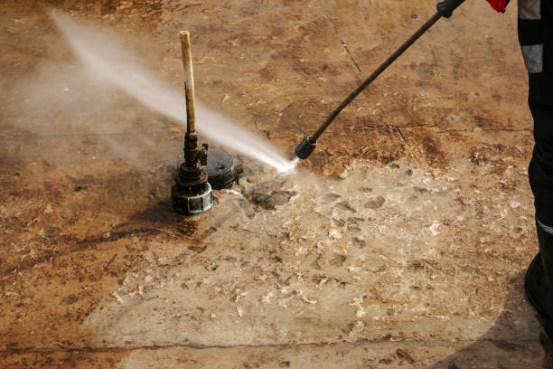
Why are pressure and nozzle angle important?
The pressure and nozzle angle determine whether the cleaning is “gentle removal” or “violent damage”.
Pressure range : 2000–3000 PSI is optimal. Below this range, the coating becomes difficult to clean; above 3000 PSI, the wood surface is easily damaged.
Nozzle Angle :
15 degrees → Suitable for stubborn coatings or driveway stains;
25–40 degrees → Milder, suitable for cleaning large areas of deck.
Nozzle distance : Keep it between 12–18 inches to clean thoroughly without leaving grooves in the wood.
Test data from Consumer Reports also states that a 25-degree nozzle is the most balanced choice on most wood surfaces.
Preparations before using the electric pressure washer
Experience has taught me that good preparation can save you half the trouble.
Clean up the scene : move furniture and flower pots to avoid damage.
Protect the perimeter : Cover flower beds with tarps and spray the ground first to reduce splashing.
Check the wooden boards : Loose wooden boards should be nailed in advance, otherwise they will crack when hit by water pressure.
Safety equipment : Wear goggles, gloves, and protective shoes, don’t be bothered.
The first time I didn’t bring goggles, sawdust almost hit my eyes. After that, I never dared to skip this step again.
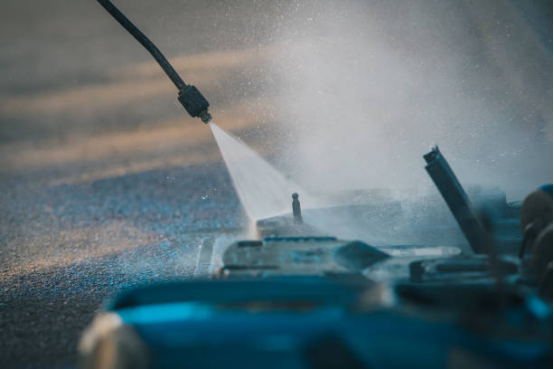
Effective ways to remove old paint
Clean in sections to avoid omissions
Start at one end and move at a constant speed, slightly overlapping each spray stroke.
Don’t stay in the same spot for too long, otherwise it will be easy to get out of the groove.
Secondary cleaning
If some places cannot be flushed away the first time, you can shorten the distance and clean them again.
Stubborn areas can be agitated with a stiff bristle brush for greater efficiency.
Alternative method
Hand scraper : suitable for edges and corners.
Chemical strippers : Effective for particularly thick coats, but be careful with ventilation.
Light sanding : The final finishing touch to make the surface smoother.
How to Choose the Right Electric Pressure Washer
If you only clean your deck or driveway occasionally, you don’t need a commercial-grade machine. A standard home model will suffice. When choosing, consider the following key parameters:
PSI (pressure) : 2000–3000 PSI is recommended for home use, which is sufficient to handle common stains and cleaning needs.
GPM (water flow) : Choose between 1.5–2.5 GPM to ensure flushing efficiency without excessive water consumption.
Motor type : Electric models are quieter, simpler to maintain, and ideal for home use; gas models are better suited for large areas or high-intensity cleaning.
Weight : Models under 50 pounds are easier to move, especially for users who need to move frequently.
In addition, additional features can also enhance the user experience:
Replaceable nozzles to facilitate different cleaning scenarios;
Built-in detergent tank, you can directly add detergent to improve the decontamination effect;
An extension hose lets you move the machine less when cleaning your yard or car.
I use a 2300 PSI / 1.8 GPM model, which is light and easy to carry, and can fully meet daily household needs.
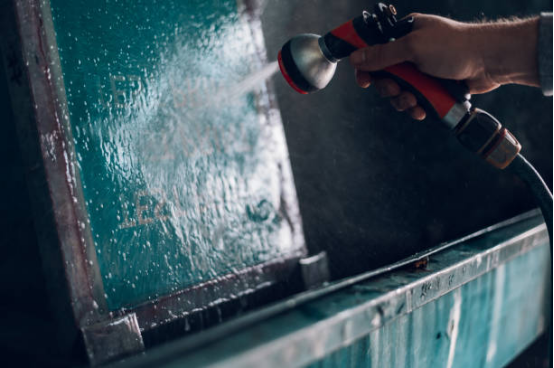
Common Misunderstandings and Safety Reminders
Common Misconceptions
Excessive pressure: The wood may be damaged if you are not careful.
Nozzle error: Using a 40-degree nozzle to remove thick paint is basically impossible.
Too high a concentration of detergent: can easily corrode the wood surface.
Safety Tips
Do not aim at people or pets.
Inspect hoses and fittings before use.
Avoid operation in rainy or windy weather.
These are the pitfalls I’ve encountered. For example, one time I diluted the detergent too concentrated and the surface of the wooden board changed color.
Finishing and maintenance after cleaning
Cleaning is just the first step; the finishing touch determines how long the effect will last.
Allow to dry naturally : at least 24–48 hours before painting.
Seal for protection : Choose a moisture-resistant and UV-resistant wood sealant.
Regular maintenance : Check the sealer annually and reapply if necessary.
Electric cleaning machines also need maintenance:
Rinse the pump tubing with clean water after use.
Add pump protectant when storing in winter.
Check nozzles and hoses regularly for aging.
Give your deck a brand new look with an electric pressure washer
If used correctly, an electric pressure washer can help you:
Quickly removes old paint and stains;
Protect the wood surface from excessive damage;
Extend the life of your deck.
To find the right machine, you can check out our pressure washer recommendations page and choose a reliable electric pressure washer with suitable parameters.
With the right tools and a little patience, you can easily transform your deck and patio in just a weekend.