Spray Gun & Wand Guide: Three Things That Actually Separate a Good Gun from a Cheap One
Most spray guns look similar in photos. The differences that matter — material at the fittings, PSI rating, lance length, trigger fatigue over a long session — only show up in use. This guide covers the three variables worth comparing before you buy, and how they map to the three guns in the Spraysmith lineup.
 M
M
The Three Variables That Actually Matter When Choosing a Spray Gun
Spray guns are not all the same product at different price points. Three specific variables determine whether a gun holds up over two years of regular use or starts leaking and stiffening after six months. Everything else — color, branding, box photography — is noise.
The fittings are where guns fail first. Water contacts the M22 inlet, the lance-to-gun joint, and the nozzle outlet at high pressure on every trigger pull. Over repeated cycles of wetting and drying, temperature swing, and the mineral deposits left by hard water, the material at these joints determines whether they stay sealed or start to corrode, pit, and leak.
The PSI rating on a gun is its maximum safe operating pressure — the tested limit for the trigger valve, wand body, and fittings under sustained load. Using a gun above its rated PSI is the most common cause of trigger failure and fitting blowout in the field. It doesn’t usually fail immediately — it degrades the internal valve over repeated high-pressure cycles until the trigger starts to leak or seize.
For residential electric pressure washers outputting 1500 to 2300 PSI: a 4000 PSI rated gun provides comfortable margin. For corded models at higher output or any commercial-grade machine: the 5000 PSI rated gun covers the full range. The extra PSI rating costs a few dollars more and is not the bottleneck in any other performance dimension.
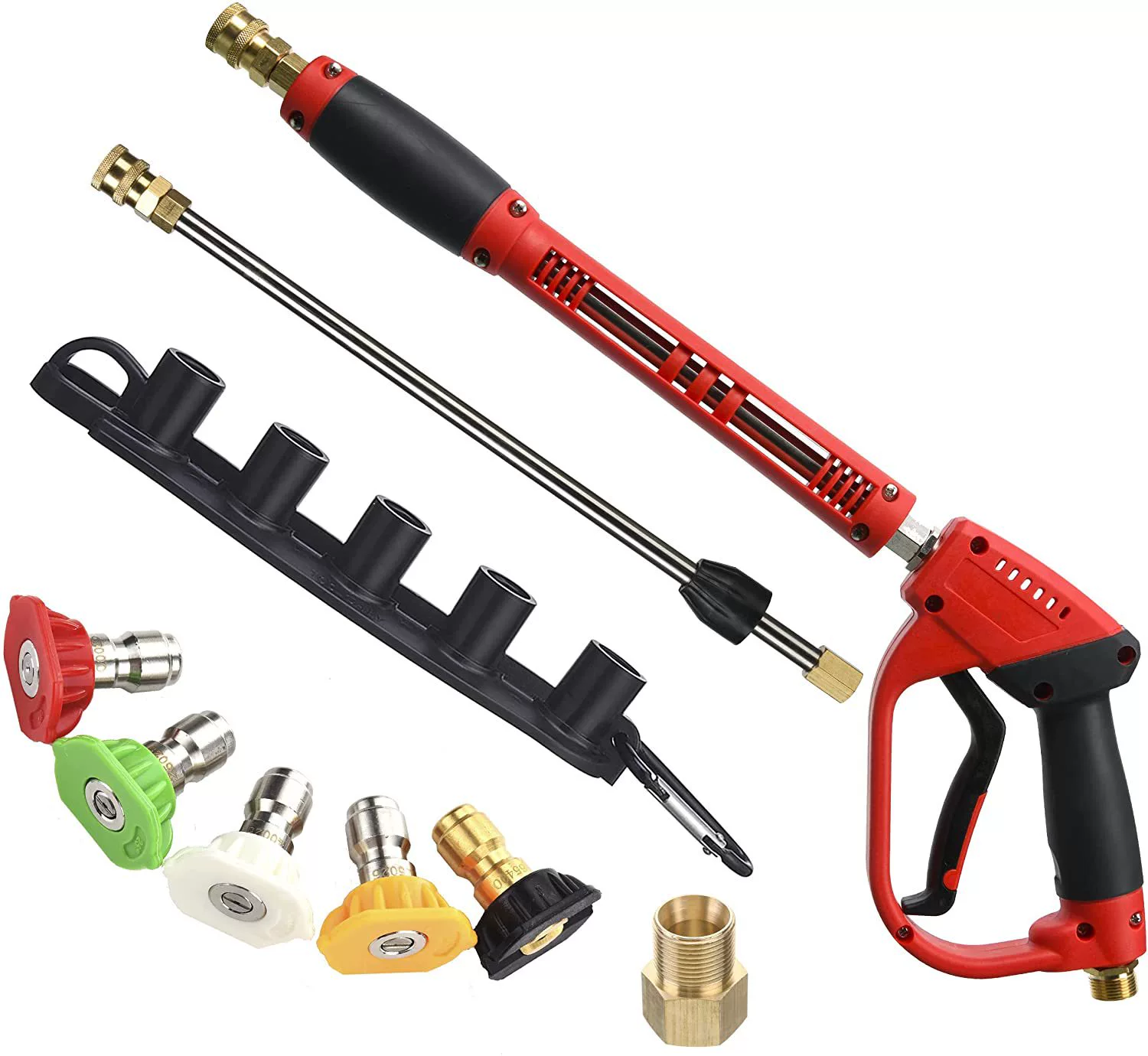
Lance length determines two things: physical reach and natural working distance from the surface. A 40-inch lance lets you spray second-floor siding from the ground, clean under a vehicle chassis without crouching, and reach the far side of a fence panel without repositioning. It also keeps the nozzle tip further from the surface by default — which reduces the risk of over-pressuring a surface when your hand moves toward it instinctively.
The anti-tangle swivel is the other feature that affects daily use. High-pressure hose has memory — it tries to return to its coiled storage shape during use. Walking around a vehicle or along a fence line causes the hose to rotate and apply torque to the gun-to-hose joint. A swivel connector at that joint lets the hose rotate freely without transmitting stress into the trigger housing or fitting threads.
Three Spraysmith Guns — Which One Fits Your Setup
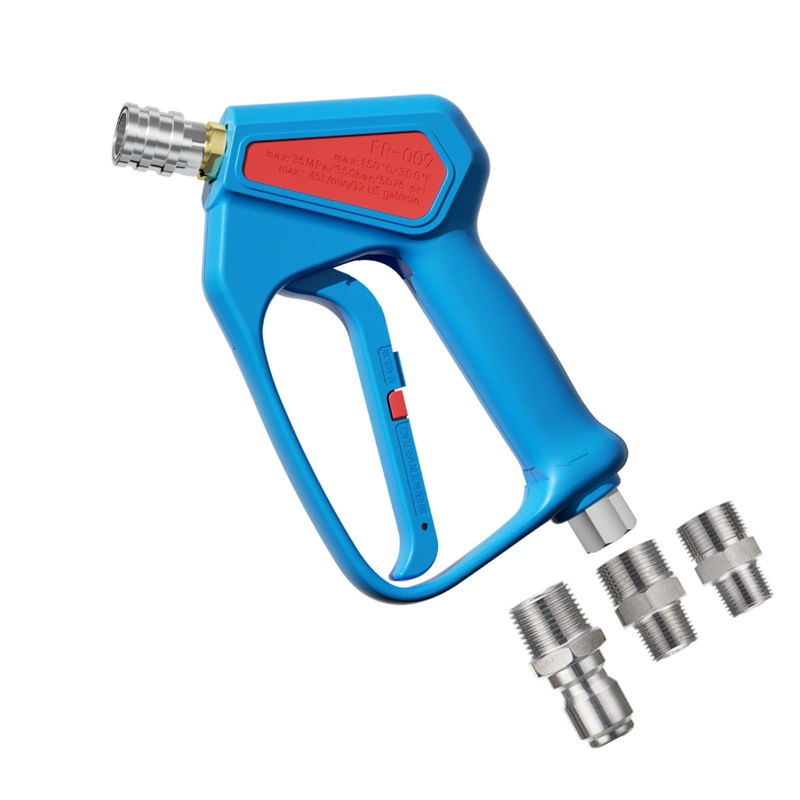
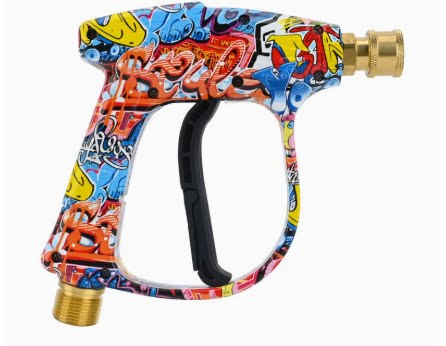
The three guns in the lineup are differentiated by PSI rating, lance length, and whether they include an anti-tangle connector — not by quality tier. Each is built with copper or brass fittings. The choice between them is about matching the gun to your machine output and your most common job.
| Gun | PSI Rating | Lance | Anti-tangle | Fittings | Best for | Price |
|---|---|---|---|---|---|---|
| Spray Gun Kit — M22 | 150bar (~2175 PSI) | Standard | — | Copper M22 | Cordless guns, light corded use | $36.99 |
| 4000 PSI Anti-Tangle | 4000 PSI | Stainless steel | ✓ | Copper + stainless | Corded models, frequent use, long sessions | $43.99 |
| Universal 5000 PSI | 5000 PSI | 40-inch extended | ✓ | Copper M22 | Max reach, high-output machines, versatile | $45.99 |
How to Make a Spray Gun Last: Three Minutes After Every Session
Spray gun failure modes are almost entirely preventable with a short post-session routine. The three causes of early gun failure — mineral buildup in the trigger valve, fitting corrosion from stored moisture, and UV degradation of the trigger spring housing — all respond to the same habit: flush, drain, store dry.
After every use: Release the trigger lock if engaged. Run clean water through the gun for 30 seconds to flush mineral deposits from the trigger valve and internal passages. Hold the gun vertically with the nozzle end down and squeeze the trigger several times to drain residual water from the valve. Store indoors or in a cool, dry location — not in direct sun or a hot garage bay where UV exposure accelerates plastic degradation.
Once a season: Inspect the M22 inlet threads and the lance-to-gun joint for mineral deposit buildup or early corrosion pitting. If you see white mineral scaling at the threads, soak the fitting in a 50/50 white vinegar and water solution for 30 minutes, then scrub with an old toothbrush and rinse. Reapply a thin film of waterproof silicone grease to the O-ring seals at each joint before reassembling.
Before winter storage: Same protocol as any pressure washer pump — run Pump Saver antifreeze through the gun before storing in a space that drops below freezing. Water in the trigger valve expands when it freezes and cracks the valve body. See the winter storage guide for the complete protocol.
 M
M
The spray gun question I got most often from clients in my maintenance consulting years wasn’t about PSI or nozzle angles — it was “why does this thing keep leaking at the wand joint?” Almost every time, the answer was the same: aluminum fittings that had corroded and pitted from hard water mineral deposits, creating a surface that the O-ring couldn’t seal against anymore. Nashville has moderately hard water, and a gun left wet in a garage through a humid summer will show that pitting inside a year if the fittings are aluminum.
The fix isn’t a better O-ring — it’s a gun with brass or copper at the critical joints. Once I started specifically recommending copper-fitted guns to clients, the “leaking wand joint” complaint essentially disappeared from my follow-up calls. It’s not a premium feature; it’s just the right material for the application. Any gun that will be used outdoors with tap water and stored in a garage should have copper or brass at the fittings. That’s the single spec worth paying attention to.
Marcus Whitfield · Founder, Spraysmith · 12 years residential maintenance · Nashville, TN
Questions About Spray Guns and Wands
Related Reading
- How to release pressure safely before disconnecting hoses or changing nozzlesSafety · 4 min
- Complete safe use guide: nozzle distances, angles, surfaces to avoidSafety · 6 min
- Never pour bleach directly into a pressure washer — here’s whySafety · 5 min
- How long does an electric pressure washer last? Maintenance and lifespan guideMaintenance · 7 min
- Can pressure washing your car really save time and effort?Cars · 6 min
- Is it safe to use an electric pressure washer in winter?Seasonal · 5 min