Driveway and Sidewalk Cleaning: PSI, CU, Nozzles, and Surface Cleaner Guide
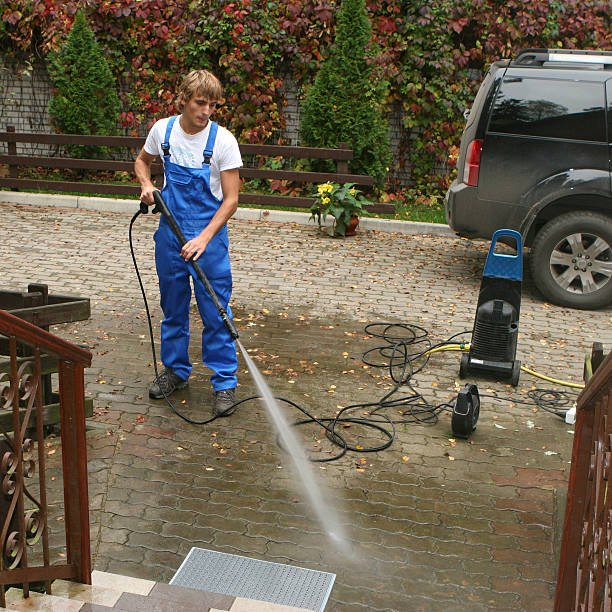
Driveway and Sidewalk Cleaning: PSI, CU, Nozzles, and When You Need a Surface Cleaner
For driveway and sidewalk cleaning, most residential concrete and asphalt surfaces respond well to a rated 2000–2400 PSI machine at 1.6–2.0 GPM — that gives you a Cleaning Units (CU) range of 3,200 to 4,800. The nozzle you choose and whether you use a surface cleaner attachment matter as much as the machine itself. Below, I’ll walk through the specs, the gear choices, the grime-specific techniques, and the mistakes that cost homeowners the most time and money.
What PSI and GPM Do You Need for Driveway and Sidewalk Cleaning?
Start with this: the useful number for comparing cleaning power is CU — Cleaning Units. The formula is simple:
For standard residential concrete driveways and sidewalks, here’s the range that works:
| Surface | Rated PSI | GPM | CU Range | Starting Nozzle |
|---|---|---|---|---|
| Concrete driveway | 2000–2400 | 1.6–2.0 | 3,200–4,800 | 25° green |
| Concrete sidewalk | 1800–2200 | 1.4–1.8 | 2,500–4,000 | 25° green |
| Asphalt driveway | 1800–2200 | 1.6–2.0 | 2,900–4,400 | 25° green or 40° white |
| Light dust / pollen only | 1500–1800 | 1.2–1.6 | 1,800–2,900 | 40° white |
A light-duty machine under 1800 PSI can handle loose dust and pollen. But once you’re dealing with algae, embedded mildew, or oil stains, you need the 2000+ PSI range — and the right nozzle and detergent to match. If a product listing leads with “up to 3000 PSI” but doesn’t list rated PSI and GPM together, treat that number carefully. You can shop electric pressure washers by rated specs on our store to compare real cleaning output.
The 25° green nozzle is the standard starting point for concrete and asphalt. It gives enough cleaning force without concentrating water into a destructive stream. A 15° yellow nozzle handles stubborn stains, but requires more caution — hold it at 10–12 inches and keep moving.
When Does a Surface Cleaner Make More Sense Than a Nozzle?
In our experience, a surface cleaner attachment is one of the highest-impact upgrades you can make for driveway and sidewalk cleaning — and it often matters more than buying a bigger machine.
Here’s when a surface cleaner earns its spot in your setup:
- Driveways over 200 sq ft: A surface cleaner cuts cleaning time by roughly 50–70% compared to a wand alone. For a standard two-car driveway (400–600 sq ft), this turns a 90-minute job into a 30–40 minute job.
- Sidewalks with expansion joints: A wand with a 25° nozzle works fine for narrow sidewalks, but a surface cleaner prevents the uneven lines that show up when you overlap wand passes inconsistently.
- Large patios or pool decks: Same principle — even coverage without the arm fatigue of holding a wand at a consistent angle for an hour.
Before buying, check two things: your machine’s GPM rating (most residential surface cleaners need at least 1.4–2.0 GPM to spin properly) and the fitting size (M22 threaded or quick-connect). A surface cleaner that can’t spin fast enough just smears water. Check our electric pressure washer accessories guide for compatibility details and fitting standards.
How Do Grime Type and Surface Condition Change Your Approach?
Not all driveway dirt is the same. Matching your technique to the grime saves time and prevents surface damage.
| Grime Type | PSI / Nozzle | Technique |
|---|---|---|
| Dust, pollen, loose dirt | 1500–1800 PSI, 40° white | Light pass, no detergent needed. Don’t push pressure higher than necessary. |
| Algae, green growth, mildew | 2000+ PSI, 25° green | Pre-treat with a concrete-safe detergent. Let it dwell 5–10 minutes, then wash. Single pass usually won’t cut it on thick growth. |
| Oil stains | 2000+ PSI, 25° green | Detergent soak time matters more than pressure. Apply degreaser, wait 10–15 minutes, then wash. Old oil stains on porous concrete may not fully disappear. |
| Moss in sidewalk joints | 2000+ PSI, 15° yellow | Controlled distance (8–10 inches), keep the nozzle moving. Pause too long and you’ll etch the concrete surface. |
What Are the Common Mistakes in Driveway and Sidewalk Cleaning?
- Standing too close with a narrow nozzle. This etches concrete or strips asphalt aggregate. Maintain at least 8–12 inches between the nozzle tip and the surface. Closer is not cleaner — it’s just more destructive.
- Skipping detergent on organic growth. If you’re fighting algae, mildew, or moss, pressure alone forces you to use a narrower nozzle and get closer to the surface. Pre-treating with detergent at a lower pressure is safer and usually more effective.
- Using the same settings for concrete and asphalt. Asphalt is softer than concrete. Drop to a wider nozzle angle and increase your distance when switching surfaces.
- Not rinsing detergent residue. Leftover soap creates a film that attracts dirt faster and can discolor concrete over time. Always do a final clean-water rinse pass.
- Ignoring machine behavior. If your pressure washer starts and stops mid-clean — cycling on and off — that’s not a surface problem. It’s likely a pressure cycling issue with the unloader valve or a supply leak. Here’s a full troubleshooting guide: why your electric pressure washer starts and stops by itself.
Driveway and Sidewalk Cleaning FAQ
What PSI do I need to clean a concrete driveway?
Rated 2000–2400 PSI at 1.6–2.0 GPM covers most residential concrete driveways. That puts you at 3,200–4,800 CU — the number that actually compares cleaning output. Max PSI or “up to” claims on product pages may not reflect sustained working pressure, so always look for rated PSI paired with GPM.
Do I need a surface cleaner for my driveway?
For driveways over 200 sq ft, a surface cleaner prevents streaking and cuts cleaning time significantly. For small sidewalks, a 25° nozzle on the wand works fine. A surface cleaner is a $25–$40 upgrade that often delivers better results than spending more on a higher-PSI machine.
Can I use a 0° nozzle on my driveway?
Not recommended. A 0° red nozzle can etch concrete, gouge asphalt, and damage expansion joints. Use a 25° green nozzle for general cleaning or a 15° yellow nozzle for stubborn stains — both at 8–12 inches distance. I ruined a deck once with a 0° nozzle. Concrete isn’t immune to the same mistake.
How often should I pressure wash my driveway?
Most residential driveways need cleaning 1–3 times per year. Climate, tree cover, and vehicle traffic all affect buildup. In humid southern states with heavy shade, algae can show up within months. In drier climates, once a year may be enough. Frequent light cleaning prevents the kind of heavy buildup that requires aggressive pressure and detergent.
Can a cordless pressure washer clean a full driveway?
Cordless battery models work for small sidewalks or spot rinsing, but they typically lack the sustained GPM needed for a full two-car driveway. Battery drain reduces pressure output over time, and most cordless units peak below 1.5 GPM. A corded electric pressure washer is more practical for this task — no refueling, consistent power, and lower noise than gas.
What detergent should I use for oil stains on a driveway?
Use a concrete-safe degreaser. Apply it directly to the stain, let it soak for 10–15 minutes, then pressure wash at 2000+ PSI with a 25° nozzle. Dwell time matters more than pressure here. Old oil stains that have soaked deep into porous concrete may leave a shadow even after multiple passes — that’s a surface limitation, not a machine failure.
Planning the Task so It Actually Gets Done
If driveway cleaning feels like a big chore, break it into parts. Clear the vehicles first. Pre-treat stains and let detergent dwell while you set up the machine. Work in sections — one half of the driveway at a time — and rinse top-down so dirty runoff doesn’t re-soil what you’ve already cleaned. A two-car driveway with a surface cleaner and a mid-range electric washer is a solid Saturday morning project, not a full weekend. If you want a framework for breaking big cleaning tasks into manageable steps, this guide helps: how to reduce the psychological burden of cleaning with an electric pressure washer.
Find the Right Setup for Your Driveway and Sidewalk
Match rated PSI, GPM, surface cleaner compatibility, and nozzle selection to your specific surface and grime — not to a marketing headline. Browse electric pressure washers by rated specs and find the right match for your driveway and sidewalk cleaning.