The revolutionary application of electric pressure washers in deep cleaning after renovations

As the last rays of sunlight reflect off the freshly painted walls, you know the renovation is nearing completion. But the thin layer of dust, clinging cement, and tiny paint splatters on the floor, windowsills, baseboards, and even the air conditioner vents still make the space feel slightly incomplete. That’s when an electric pressure washer comes in—not just a cleaning tool, but a powerful instrument for removing all the accumulated renovation residue in one go.
This article, drawing on experience, professionalism, authority, and credibility, systematically dissects the value of electric pressure washers in post-renovation cleaning, covering principles, operational strategies, maintenance methods, and future trends. At the end of the article, we also invite you to visit our website for more information on deep cleaning processes and tool support.
Why are traditional cleaning methods ineffective at removing renovation residue?
Common problems at renovation sites include dust from cement and putty mortar, a foggy cement film after large-area wall construction, paint splatter, and residual repair marks on wall or floor tiles. According to several professional service providers, the traditional sweeping and mopping method usually requires more than two passes and is inefficient and prone to omissions.
In addition, during the renovation process, a large number of fine particles not only settle in visible places but also float up again in heating and cooling systems, air conditioning vents, and wall cracks, causing long-term effects on indoor air quality.
At this point, the intervention of the electric pressure washer is like opening up a new battlefield for “renovation cleaning.” It not only tackles stubborn cement residue and paint stains but also accelerates the cleaning of details such as walls, floors, exterior balconies, door frames, and window sills, thus making the space truly “occupiable.”
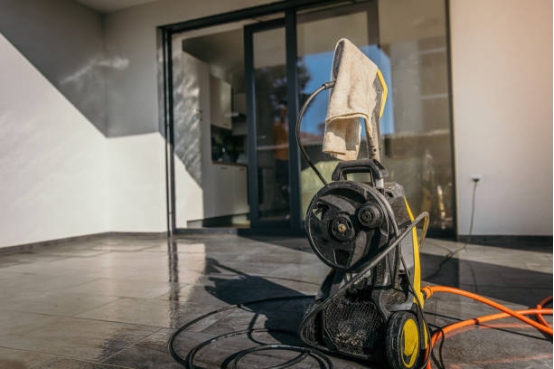
The working principle and advantages of electric pressure washers for post-renovation cleaning
Principle Analysis
Electric pressure washers use electricity to drive a water pump, which increases the water pressure to a certain PSI (pounds per square inch) or bar and releases a high-speed, concentrated, or atomized water flow through different nozzles and spray patterns to physically impact and peel off surface deposits.
In the post-renovation setting, this means:
- For hard surfaces such as tiles, stone, and concrete, a strong water flow can quickly wash away the attached dust and mud film.
- The spray nozzle and angle adjustment can precisely handle paint splatter and residual adhesive in tile grout and reduce scratches caused by repeated friction.
- Compared to static wet mopping, dynamic high-pressure water flow is more efficient at cleaning high places and hard-to-reach areas (such as the top of doors, behind baseboards, and wall cracks).
Advantages of application after renovation
- Efficiency Improvement: Using an electric pressure washer can significantly reduce the time required for both the “rough cleaning” and “deep cleaning” stages. Traditional cleaning methods are time-consuming, especially when removing grout lines, cement residue, and paint splatter. According to industry data, pressure-wash tools use less water and take less time than conventional hose methods when cleaning exterior walls or balconies.
- High surface recovery: Compared to wiping with a cloth or mopping with water, pressurized water can remove residue more cleanly, thereby improving the overall look and texture of newly renovated walls.
- More comprehensive cleaning coverage: walls, floors, windows, baseboards, door frames, and vents—these “hidden places of renovation residue” can all be included in the cleaning scope by adjusting the nozzle and angle.
- Reduce secondary pollution: Fine dust and residue from renovations may repeatedly float and settle if only swept and mopped. Using high-pressure water helps remove particles from the space, rather than simply moving them on the surface. Professional cleaning guidelines also emphasize the principles of “from top to bottom” and “coarse to fine.”
In summary, the electric pressure washer acts as an “accelerator” in the post-renovation operation phase, making the cleaning process more systematic and faster and improving the final “occupancy” status of the space.
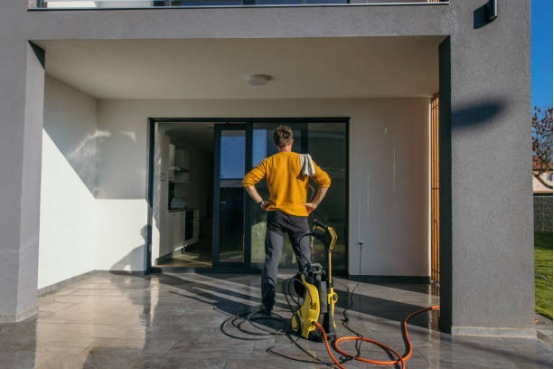
How to use an Electric Pressure Washer after renovation
Preparation stage
- Remove obstructions: Remove or cover furniture, finished flooring, and decorations to prevent water from damaging or penetrating the surface during cleaning. Expert advice suggests removing or covering small items scattered during the renovation process first.
- Preliminary dust removal: Use a HEPA vacuum cleaner or industrial vacuum cleaner to pre-treat large dust particles and floor debris. This prevents the high-pressure water jet from scattering large amounts of particles into a mist.
- Choose the appropriate nozzle and settings: For walls and cement residue, it is recommended to use a wide-angle nozzle (such as 25° or 40°) for wide coverage and moderate impact; for paint splatter or adhesive, a narrow-angle nozzle can be used, but attention should be paid to the distance.
- Protect sensitive areas: For newly painted walls, uncured wood veneers, electrical box openings, etc., it is recommended to use low-voltage pre-testing and combine it with manual wiping to avoid damage.
Execute main process
- Cement ash removal: First, wet the walls and floor with an electric pressure washer to loosen the ash layer; then spray from top to bottom, ensuring that gravity carries the residue to the ground.
- Paint splatter and adhesive residue removal: Apply appropriate pressure to the contact surface, maintaining a spray angle of approximately 30–45° and a distance of 38–45 cm to avoid damaging the surface. If the adhesive residue is stubborn, gently brush it off with a soft brush first, then rinse with high-pressure water.
- Detailed cleaning: Use low-pressure rinsing or high-pressure spraying to thoroughly remove residual dust from areas such as baseboards, window frames, door gaps, and air conditioning vents.
- Final rinse: For tile, marble, or sealed concrete floors, rinse from the edges of the walls towards the center, ensuring the water flows in one direction to collect and drain away wastewater. For non-hard surfaces, use caution or use a wet mop instead.
Follow-up inspections and finalization
- Once all surface water has evaporated, quickly wipe away any remaining water with an absorbent squeegee or dry cloth to avoid leaving watermarks or scratches.
- It is best to perform a “second cleaning” within 24–48 hours: during the resting period, fine dust may resettle, so a final cleaning can be done by dry wiping or vacuuming. This step is the “second deep cleaning” strategy emphasized by professional services.
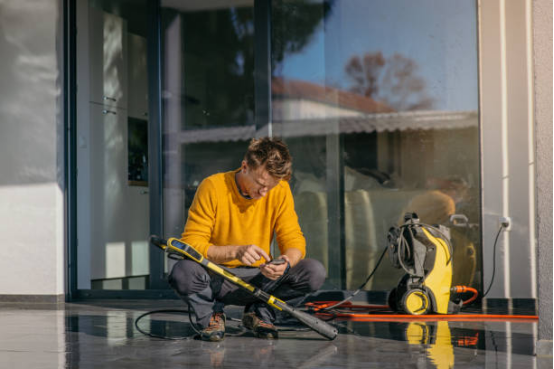
Post-renovation cleaning upgrade background and the role of the electric pressure washer
In the “renovation-move-in” chain, the cleaning process is being re-evaluated. The following trends are particularly noteworthy:
- Indoor Air Quality (IAQ) Standards Upgraded: Residual dust and fine particles after renovations are now identified as sources of indoor air pollution, prompting homeowners and contractors to pay more attention to deep cleaning.
- The demand for shorter delivery cycles is strengthened: especially in the context of leasing and commercial renovation, the time compression “from the end of construction to the usable space” makes fast and reliable cleaning tools a key competitive advantage.
- More efficient, low-chemical-load cleaning solutions are emerging: the industry is shifting from “heavy chemical agents” to “physical cleaning tools + simplified dosage,” which provides a market opportunity for the “water-based cleaning” approach of the electric pressure washer.
- The trend of intelligent equipment and diversified accessories: The new generation of electric pressure washers offers multiple pressure settings, replaceable nozzles, and expansion accessories (such as crevice brushes and rotating nozzles), which makes it more adaptable to various materials in post-renovation cleaning.
Summarize
The completion of renovations is just the beginning; the true “end” lies in a space where you can move in and use it with peace of mind. By integrating an electric pressure washer into your cleaning process, you not only improve speed but also upgrade surface experience, air quality, and detailed coverage. This article provides a systematic perspective by exploring the process from four dimensions: principles, operation, maintenance, and trends.
If you wish to further master the usage skills of electric pressure washers, cleaning methods for different surface materials, or learn about maintenance and accessory selection guidelines, you might find our articles here to break down various cleaning scenarios, operating strategies, and equipment maintenance methods in detail.
Are you ready to give your newly renovated space a deep cleaning treatment before you actually move in, using an electric pressure washer?