Electric Pressure Washer Rust Prevention Tips for Cleaning Metal Surfaces: Creating a Long-Lasting Shiny Metal

Metal is an elegant material, with its sharp lines and unwavering luster. However, it can easily darken in the presence of moisture, oxidation, or chemicals—a faint layer of reddish-brown rust that is always a sight to behold. While you may have used sandblasting, chemical rust removers, or mechanical polishing, for small and medium-sized structural parts, outdoor metal fixtures, and vehicle frame components, using an electric pressure washer offers a viable approach that combines efficiency and safety.
The question is: How can you minimize secondary corrosion and even extend the lifespan of rust prevention while using high-pressure water to clean metal surfaces? This article will explore principles, operation, maintenance, and trends, gradually developing a “cleaning + care” approach to metal rust prevention.
Why Use an Electric Pressure Washer to “Bathe” Metal? — Cleaning Principles and Limitations
Physical impact + surface deoxidation: cleaning principle of high-pressure water flow
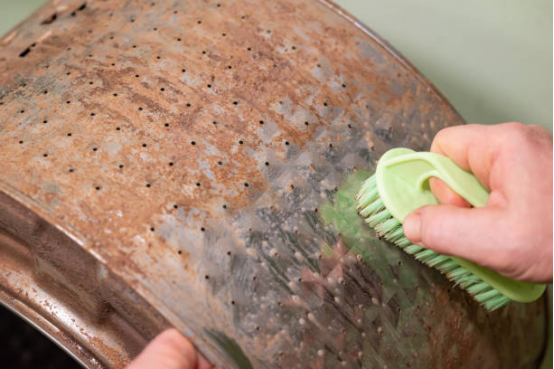
High-pressure water jets can remove loose scale, attached dirt, or contaminants from metal surfaces. Similar to water jet cleaning, this method is a form of “mechanical stripping.” Existing data indicates that at appropriate pressure and nozzle angle, a press can effectively remove paint, rust, or contamination, but excessive pressure should be avoided, as it can cause deformation or pitting of the metal.
This physical action has several advantages when cleaning metal surfaces:
- No risk of chemical residue : Unlike strong acid or alkaline rust removers that may leave chemical residues or corrode metals.
- Relatively high efficiency : For thin rust, primary oxide scale, and attached impurities, high-pressure spray cleaning often works in one go.
- Can be used with auxiliary media : During the cleaning process, metal-friendly cleaning agents or corrosion inhibitors can be reasonably introduced to improve the cleaning effect and rust prevention.
However, there are limits: for deep rust, intergranular corrosion, and thick oxide layers, water jets alone are often insufficient and must be combined with mechanical grinding, pickling, or sandblasting. In industry parlance, this “washable depth” is often referred to as “surface-level corrosion,” making it suitable for removal with high-pressure water jets.
In addition, high-pressure spraying can damage the metal substrate, causing local cracking or erosion if used too vigorously, too close, or at an incorrect nozzle angle. Therefore, skill is essential.
In summary, using an Electric Pressure Washer to clean metal is a “highly efficient + risk-controlled” tool solution – it can not only “descale” the metal, but also lay the foundation for subsequent rust prevention under correct operation.
Cleaning + Anti-corrosion Operation Strategy: Steps, Precautions and Auxiliary Materials
The following is a recommended sequential process, along with details to consider when operating.
1. Pre-processing stage: prepare the “scaffolding”
Surface degreasing : Metal surfaces covered with oil, cutting fluid, lubricants, and other contaminants require degreasing first. Typically, a neutral, metal-compatible detergent can be diluted and sprayed on the surface. Allow the surface to soak for 5–10 minutes before rinsing with low-pressure water. This allows the subsequent high-pressure impact to reach the rust spots, rather than dealing with the oil first.
Shield non-cleaning areas : Existing protective coatings, seals, plastic parts, etc. should be covered with shielding cloth or plastic film to prevent high-pressure water from intruding.
Partition test spraying : Choose an inconspicuous small corner of the metal and spray it with weaker water pressure first to observe whether the spraying causes peeling, scratches or excessive erosion.
2. High-pressure flushing stage: precise spraying + combined cleaning agent
Pressure Setting : For typical household or mid-sized cleaning machines, it’s recommended to maintain a moderate pressure (PSI or bar) and avoid excessively high pressures. The specific pressure depends on the metal material (iron, carbon steel, stainless steel, aluminum alloy, etc.). For iron, excessive pressure can cause surface deformation; for stainless steel or aluminum, gentler pressure is more appropriate. In practice, it’s common to start with a low- to medium-range pressure (e.g., 1,200–2,000 PSI) and gradually increase it based on cleaning results.
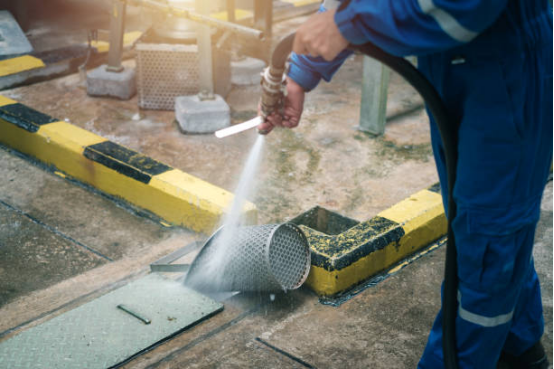
Nozzle selection and distance : We recommend using a 15°, 25°, or 40° fan nozzle. Avoid direct spraying with a 0° spot nozzle. Maintain a certain distance (e.g., 20–40 cm) between the nozzle and the metal surface and move it in a sweeping motion (left-right swing).
Sequence and rhythm : Spray from the edge of the metal part to the center and from top to bottom to avoid backspray contamination. The spraying time for each area should not be too long to prevent repeated high-pressure water from acting on the same point and causing local damage.
Use of auxiliary cleaning agents : If the surface is severely rusted and oily, a metal cleaning agent or corrosion inhibitor can be added during the rinse process. For example, Master Fluids’ metal cleaning concentrate can “remove oil and dirt while leaving a rust-proof film” under high-pressure spray conditions, making it ideal for both metal cleaning and corrosion protection.
When using, the cleaning agent is usually diluted according to the recommended ratio and then applied through the injection device or sprayed before rinsing. The cleaning agent should be used for a controlled period of time to avoid its chemical corrosion to the metal.
3. Post-processing: rapid rust prevention + protective sealing
Thoroughly dry : After high-pressure washing, quickly drain all moisture from metal surfaces and pores. This can be done by using compressed air, airing (if conditions permit), or drying the equipment. Many users leave residual water inside the equipment, which can cause recurring localized corrosion. Industry experts recommend: “After cleaning, hold the spray gun in place and lift the equipment to allow as much water as possible to drip out.” (This is classic advice from the pressure washing community.)
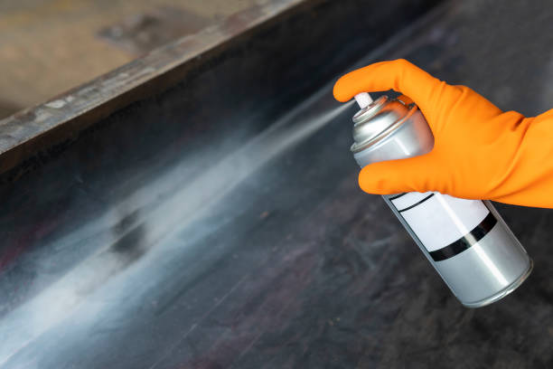
First anti-rust coating : Apply anti-rust protective film as soon as possible before the metal is “naturally oxidized”. The options are:
• Apply metal anti-rust oil, corrosion inhibitor or rust preventive
• Phosphate/passivation treatment (for steel parts)
• Spray anti-rust primer or epoxy primer
• Use dry film type rust preventive (volatile or solid film type)
For example, industrial metal cleaners can leave a corrosion-inhibiting film during the cleaning process as a first layer of protection.
Sealing or coating : If the metal structure is ultimately to be painted, powder-coated, or electrophoretically coated, ensure that the underlying anti-corrosion layer is compatible with the subsequent coating. Additionally, additional sealing should be applied to edges, seams, and threads to prevent oxygen and moisture from penetrating the coating.
Maintenance and details: Make metal more rust-resistant the more you wash it
Even if your metal is in top condition after a cleaning, don’t let up on routine maintenance. The following strategies can help extend your metal’s rust-free life.
Regular cleaning and flushing
In humid environments, coastal areas, or dusty environments, salt, dust, and moisture on metal surfaces can easily cause micro-corrosion. Periodically wiping or low-pressure washing with warm water or a diluted neutral detergent is recommended to slow the accumulation of surface contamination.
Anti-rust treatment of nozzles/quick connectors
Many high-pressure cleaning equipment nozzles and quick connectors are made of metal, which are also prone to corrosion. Some experienced people recommend:
- Use copper or brass nozzles because they are more corrosion-resistant;
- After cleaning, apply a thin layer of anti-rust oil or WD-40 or other anti-rust agent;
- After use, immerse the nozzle and accessories in clean water or anti-rust liquid to reduce air contact.
In the pressure washing community, many people have struggled with rusted nozzles for years, and one of the solutions is to “soak them in vinegar for a few days and then wipe them with a soft brush” to remove the rust.
Control water quality and dry environment
Water quality significantly affects the rate of metal corrosion. One forum post pointed out that while ultrapure or deionized water can reduce mineral deposits (such as calcium scale), it can also be more corrosive because it is “hungrier” and more susceptible to absorbing ions from metals.
Therefore, whenever possible, use a neutral, low-hardness water source; or add a simple filtration system, softener (pay attention to metal compatibility) or corrosion inhibitor at the water inlet.
In addition, if the metal is exposed to a humid environment for a long time after cleaning, it is easy to rust again. Installing a metal rust-proof cover and regular dehumidification or ventilation are details to delay corrosion.
Maintenance Log and Parts Replacement
For industrial or long-term use environments, it is recommended to establish a metal cleaning and rust prevention maintenance log . Recording the cleaning date, pressure used, media type, drying method, coating condition, etc. will help determine which links may be vulnerable to corrosion.
“Hidden parts” such as seals, O-rings, and anti-rust coatings should be replaced regularly according to their life cycle. This can help prevent leaks and corrosion before they become serious.
Future trends and business considerations
In the field of metal cleaning and rust prevention, technological evolution is primarily moving toward “intelligent control + multifunctional materials .” Here are a few trends worth noting:
- Intelligent pressure control module : In the future, electric pressure washers may have built-in sensors to monitor flow, pressure, and metal surface response in real time, and automatically adjust pressure output to protect metal surfaces from excessive washing.
- Anti-corrosion coating material composite : Develop a coating that can self-heal or “re-adsorb the anti-rust molecular layer” on the metal surface after high-pressure water washing, so that after each cleaning, the metal will automatically “self-repair” a layer of anti-rust film.
- Nano-rust inhibitor/ultra-thin passivator : Add nano-corrosion inhibitor particles or passivation molecules to the cleaning agent so that the metal surface still retains a molecular-level oxidation protection layer during the exposure period after rinsing.
- Digital management platform : At the industrial or equipment maintenance level, the IoT (Internet of Things) records cleaning frequency, stress/corrosion status of metal parts, ambient humidity, etc. to form a metal health profile, thereby formulating targeted rust prevention strategies.
From a business perspective, if you are a manufacturer or maintenance service provider, using “the ability to extend the anti-rust period after cleaning” as a selling point is more convincing than simply talking about power – after all, users care about “how long it will take for rust to return” rather than “how hard I can spray water.”
Electric pressure cleaning is just the beginning, rust prevention is the final step
Using an electric pressure washer to clean metal surfaces is an efficient and safe option. However, if you neglect subsequent corrosion protection, the result will be “washing and then rusting again.” This article covers comprehensive corrosion protection strategies, from pretreatment, rinsing, drying, to coating protection, hoping to provide you with a systematic and implementable solution.