Electric Pressure Washer Water Flow Is Unstable? A Practical Troubleshooting Guide

You just bought your electric pressure washer, and the water flow keeps fluctuating and is intermittent?
Don’t rush, don’t buy a new pump, and don’t doubt your fate just yet—first follow me and find the root cause step by step.
Principal analysis: Why does water flow instability or instability occur?
Before delving into the operational strategies, let’s first clarify the underlying logic of “unstable water flow (pulsation, fluctuation)” in electric pressure washers.
1. Balance of flow and pressure
The pump system of an electric pressure washer must maintain a baseline “static pressure” while operating. When you pull the trigger to spray, the system instantly releases pressure and delivers a high-speed stream of water. If any of the components—the pump, check valve, pressure relief device, and hose system—do not work together smoothly, pressure fluctuations or pulsations may occur.
2. Impact of air, leaks and blockages
Air ingress: Air entering the pump or hose can cause water shock waves, causing the pressure to fluctuate.
Leaking or loose: If the connection leaks, even a tiny amount, it can disrupt the pump’s feedback regulation mechanism. A user on Reddit mentioned:
“If you don’t have a good tight seal at the spigot and hose connection, it can cause surging.”
Blockage/impurities: If the nozzle, filter, inner wall of the pipe, or one-way valve is blocked, leaving only a narrow gap, the flow rate will be forced to fluctuate.
3. Unloader Valve and pump seal failure
The pressure relief valve is responsible for returning water or reducing pressure when the spray gun is closed. Improper adjustment or wear can cause pressure deviations. Deterioration and damage to the pump’s packing or gaskets can also cause internal leaks and erratic pressure. Industry literature indicates that when a pressure washer experiences erratic pressure, the manufacturer’s troubleshooting process includes checking the pump, valve, and valves.
4. Insufficient water supply system or water pressure problem
Sometimes, the cause of unstable water pressure isn’t the high-pressure pump itself but the water supply system before it enters the machine. A long or narrow water pipe, insufficient water flow, or a clogged inlet filter can cause the amount of water entering the pump to fluctuate, resulting in unstable water flow at the high-pressure end.
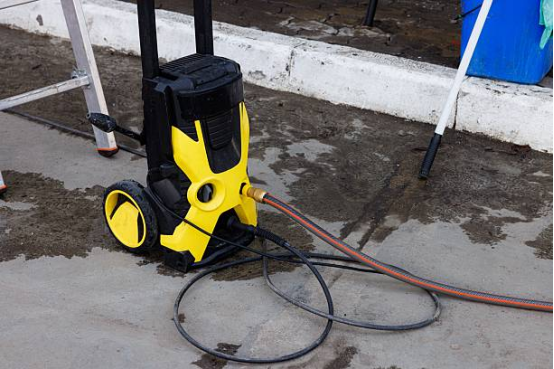
Operational Strategy: Troubleshooting Your Electric Pressure Washer Step by Step
The following is a suggested troubleshooting order: Start with the simple and actionable links, go deeper layer by layer, and don’t skip ahead to avoid “accidentally killing” the real problem.
1. Check the water supply (inlet)
Verify the water source is stable: Ensure the faucet is fully open, there are no bends or throttling in the water pipes, and the pipe diameter is appropriate (no less than 3/4″ or the manufacturer’s recommended specifications).
Remove or clean the inlet filter: Many machines have a filter at the water inlet to prevent impurities from entering the pump. If this filter is clogged, it will significantly affect the flow rate.
Expel air from the pipe: Before connecting the water pipe to the machine, let water flow in the pipe for a few seconds to flush out the remaining air, and then connect it to the high-pressure equipment.
If there is a problem in this link, then no matter how good the pump is, it will not be able to absorb enough water, and the water pressure will naturally fluctuate.
2. Check the connection/seal status
Quick connectors, hoses, and spray gun interfaces: Looseness, damaged sealing rings, and incomplete insertion of buckles may cause slight leaks or unstable pressure.
Wire-reinforced or wire-lined hoses: Users have reported in forums that non-reinforced hoses can easily expand under high pressure, causing flow loss and pulsation.
Hose length and layout: High-pressure hoses that are too long or severely bent may cause pressure loss and oscillation. It is recommended to use the shortest path and avoid sharp bends.
3. Nozzle/printer head inspection
Nozzle Replacement Test: Replace the current nozzle with a clean or new one to see if the water flow is stable. Industry maintenance blogs also highlight nozzle contamination as one of the most common problems.
Clean or replace the nozzle: dredge it with a thin steel wire, perform ultrasonic cleaning, or simply replace the pointed nozzle with a new one.
Try different nozzle angles or flow levels: If stability changes with nozzle aperture, it can be determined that the nozzle is restricting the flow.
4. Check the pressure relief valve/regulating mechanism
Slight adjustment (within the limit): Fine-tune the pressure relief valve knob under safe conditions and observe the improvement of pressure fluctuations.
Check the valve core, spring, and seal: If the adjustment is ineffective, the valve core may be worn, the spring may be aged, or the seal may fail. In this case, it is recommended to replace the corresponding components.
Verify that the pressure relief valve line is unobstructed: Check for blockage or foreign matter, and ensure that the return flow channel is unobstructed.
5. Pump and seal inspection
Disassemble and inspect the pump’s internal seals/packing/gaskets: If the seals are worn, aged, or leaking, the pump may release pressure or allow air to enter.
Check the inlet and discharge valves (Inlet/Discharge Valves): If these two one-way valves are not working properly, the water pressure efficiency of the pump will decrease and fluctuate.
Check the bearings, lubrication, and mechanical parts: When the pulse is severe, there may be mechanical jamming or bearing abnormality inside the pump.
6. Retest and verification of the entire machine
Reconnect the system and perform a complete power-on test: After checking all locations, reconnect the system, open the spray gun to maximum flow, and observe whether the water column output is stable.
Gradually shorten the system loop: If it is still unstable, shorten the hose, remove excess joints, and test the simplest path to help determine whether the problem is with the hose or the peripheral piping.
7. If the problem is still not resolved
If the problem persists after the above troubleshooting, it may be due to a design flaw, severe pump core damage, or circuit control issues (such as a piezoelectric speed control board failure). In this case, it is recommended to contact a professional repairer or seek support from the brand’s after-sales service.
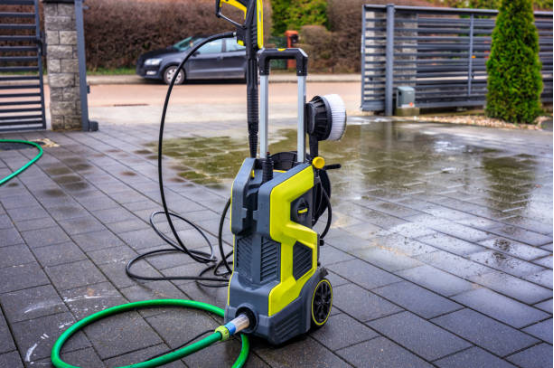
Maintenance and prevention: Reduce the risk of “flow pulse fault” on your high-pressure washer
While troubleshooting and repairing are one thing, prevention is more important than curing the root cause. The following suggestions can be considered as a daily maintenance manual:
- Clean the inlet filter and nozzle regularly: at least once before and after each use.
- Position hoses correctly: avoid sharp bends, pinching, and kinking; use reinforced hoses for greater stability.
- Use high-quality water sources: avoid hard water and water containing impurities, and install pre-filtration when necessary.
- Check seals regularly: seals, O-rings, and gaskets should be replaced according to wear cycles.
- Reasonable use of pressure relief adjustment: Do not adjust the pressure to the extreme value; give the system a certain margin.
- Post-holiday “emptying” treatment: After shutting down, pull out the gun to let the water flow out to prevent residual water from freezing in the pump or introducing air.
- Keep a maintenance log: Record every disassembly, cleaning, replacement of parts, and performance for future comparison and analysis.
Practicing these habits over a long period of time can significantly reduce the frequency of troubleshooting high-pressure water pulses and make your electric pressure washer more stable and reliable throughout its life cycle.
Brand/Market Trend Insights
In the industry, the pain points of electric pressure washers are increasingly shifting from “power/range” to “control/stability/durability.” Especially in the home or medium-duty market, consumers are more concerned about “stable operation” and “maintenance without expert assistance.”
Many manufacturers have begun to strengthen the following directions in design:
- Intelligent pressure regulation control module: Even if the load fluctuates, the machine can automatically adjust the pump speed to maintain stable output.
- Upgraded seal materials: Use more wear-resistant and compatible materials to slow down aging problems.
- Modular pump design: The pump body and valve components can be quickly replaced, reducing the maintenance threshold.
- :Self-cleaning nozzle/backflush design : reduces fluctuation problems caused by nozzle clogging.
- time andFlow monitoring and feedback system: High-end models may be equipped with sensors to monitor flow/pressure in real time, and alarm or automatically adjust in case of abnormalities.
As a user, prioritizing models with these design features can help you avoid unnecessary hassles. Perhaps the next time you read someone else’s experience with an “electric pressure washer with unstable water flow,” you’ll be inspired to consider the model you’re looking for.
Stability is the most important lifeline of an electric pressure washer.
Looking back, “unstable water flow” is actually a sign that something in our system, connections, seals, pump components, or water source is not optimized. By following the above-mentioned step-by-step investigation from the water supply to the pump, you can basically identify half of the problem.