Techniques for cleaning garden stones with an electric pressure washer

Stone surfaces in gardens often accumulate stains, moss, and algae. These contaminants not only affect aesthetics but can also pose safety hazards during humid seasons. Fortunately, using an electric pressure washer is an efficient and convenient solution. It quickly removes stubborn stains from stone and keeps the garden tidy. However, when using an electric pressure washer to clean stone, it is crucial to control the water pressure to avoid damaging the stone surface.
This article will detail how to avoid damage caused by excessive water pressure when cleaning garden stones while improving cleaning results and ensuring that you can clean garden stones safely and effectively.
Why do stains and moss easily accumulate on stone garden floors?
Stone flooring is widely used in courtyards, patios, and walkways due to its durability and aesthetic appeal. However, exposed stone surfaces often become breeding grounds for stains, moss, and algae. Especially in damp and dark environments, moss, mold, and algae can grow rapidly on the stone surface. These organic substances not only make the floor slippery, increasing the risk of falls, but can also gradually penetrate the stone surface, leading to its deterioration.
Due to its porous nature, stone easily absorbs moisture and contaminants. When rainwater or dew accumulates on the stone surface, stains can penetrate into the stone’s tiny pores, making cleaning more difficult. If not cleaned promptly, the long-term accumulation of stains and moss can cause the stone surface to become rough and lose its original luster.
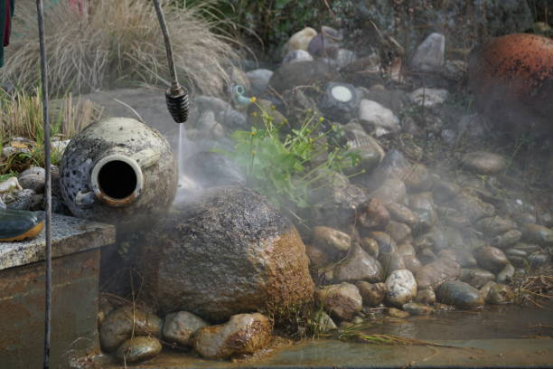
using an Electric Pressure Washer to clean garden stone
Using an electric pressure washer to clean stone is a highly effective method, removing stains and moss from the stone surface with a powerful stream of water. However, to ensure effective cleaning without damaging the stone surface, it is crucial to use the pressure washer correctly. Here are some of the main advantages of using an electric pressure washer to clean stone:
1. Effectively removes stubborn stains and moss.
The powerful water flow penetrates deep into the crevices of the stone surface, effectively removing stains, moss, and algae. Compared to manual cleaning or using a brush, the electric pressure washer can cover a larger area in a shorter time, saving significant time and effort. With regular cleaning, the stone surface will remain clean and less prone to the growth of new contaminants.
2. No chemical cleaning agents used; safe and environmentally friendly.
When cleaning stone with an electric pressure washer, water is used alone, avoiding the risk of potential damage to the stone from chemical cleaners. It is crucial to avoid using chemical cleaners containing strong acids or alkalis, as these chemicals can corrode the stone surface, causing it to lose its shine or discolor.
3. Extend the service life of stone
Regularly cleaning stone surfaces with an electric pressure washer to remove accumulated stains and harmful substances can help extend the lifespan of the stone. Cleaning stone not only helps maintain its appearance but also prevents harmful substances from seeping into the stone and causing structural damage.
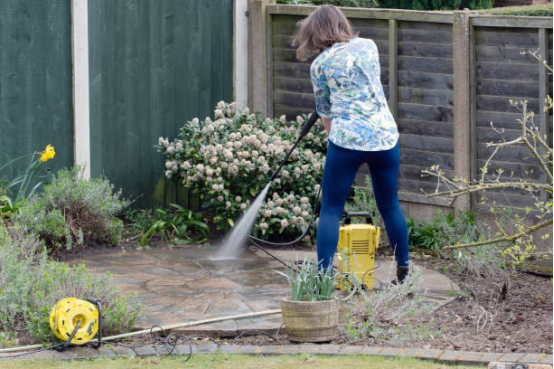
How to safely and efficiently clean stone using an Electric Pressure Washer
While electric pressure washers are a great tool for cleaning stone, improper use can damage it. Here are some tips to help you improve cleaning results while avoiding damage from excessive water pressure when cleaning your patio stone.
1. Select appropriate water pressure
Excessive water pressure can damage the stone surface when cleaning, causing it to peel or crack. Generally, the water pressure setting on an electric pressure washer should be kept below 1500 PSI, especially for delicate natural stone. Adjusting the water pressure effectively prevents excessive impact on the stone surface while ensuring cleaning results.
2. Use a suitable nozzle
Choosing the right nozzle allows for better control over the intensity and distribution of the water flow. For stone cleaning, a 25-degree or 40-degree nozzle is recommended, as this provides a gentler water flow that covers the stone surface more evenly and reduces impact. For stronger cleaning results, you can try using a nozzle with a smaller angle, but ensure the spray distance is far enough to avoid damaging the stone with a concentrated water stream.
3. Maintain appropriate spray angle and distance.
Maintain a distance of approximately 12 to 18 inches (30 to 45 centimeters) between the nozzle and the stone surface. Too close a distance may result in excessive water pressure acting directly on the stone, while too far a distance may reduce cleaning effectiveness. Additionally, ensure the nozzle is held at a certain angle (approximately 45 degrees) to the stone surface to prevent direct water impact and reduce the risk of water seepage.
4. Clean from top to bottom
When cleaning stone floors, start from higher up and work your way down. This ensures that stains are washed away with the water, preventing them from remaining in the cleaned areas. Additionally, avoid leaving water on the floor for extended periods to prevent moisture from seeping into the stone.
5. Regularly check the cleaning effect.
During the cleaning process, regularly check the stone to ensure no areas are missed. If stubborn stains remain, increase the water pressure or use a nozzle with a smaller angle. However, always maintain a consistent water flow and avoid applying excessive pressure to any area.
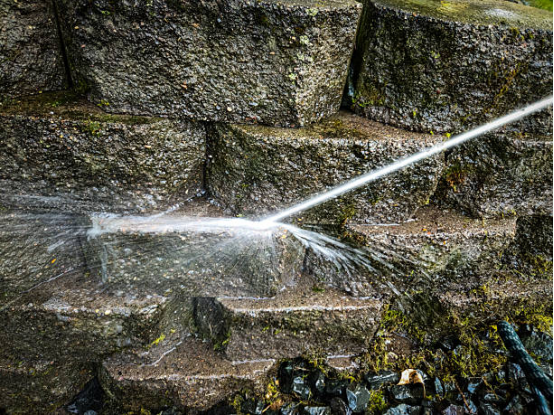
Other stone garden maintenance tips
In addition to using an electric pressure washer to clean the stone, here are some additional maintenance tips to help keep your stone patio clean and safe:
1. Regular cleaning and weeding
Regularly cleaning the stone surface and surrounding weeds not only keeps the yard tidy but also prevents plant roots from eroding the stone. Additionally, avoid allowing branches, leaves, and other debris to accumulate on the stone surface for extended periods, as this reduces stains and moss growth.
2. Prevent water stains from accumulating.
Stone floors should have proper drainage to prevent excessive water accumulation. Regularly check the stone’s drainage system to ensure smooth water flow and prevent moisture from accumulating on the stone surface for extended periods, which can lead to mold or moss growth.
3. Use stone protectant
After cleaning the stone surface, consider applying a stone protectant. These protectants can help the stone resist the intrusion of moisture and pollutants, slow down the aging of the stone, and maintain its luster and beauty.
Summarize
Using an electric pressure washer to clean patio stone is an efficient and environmentally friendly cleaning method, but proper usage is crucial to avoid damaging the stone due to excessive water pressure. By selecting the appropriate water pressure, nozzle, and spray angle, you can effectively remove stains and moss from the stone while keeping the stone surface intact.
With proper maintenance and cleaning, your patio stone will always look new, becoming an integral part of your home environment and showcasing its unique beauty.