How to dispose of the drain water after using an electric pressure washer in an environmentally friendly way? – Practical advice that complies with EPA standards

As you release the nozzle of your electric pressure washer and the water jets subside, a more important question arises: Where does the wastewater go? If not handled properly, this wastewater, containing oil, sand, and chemical residue, could enter stormwater networks and waterways, and even become subject to regulation under the Clean Water Act, resulting in penalties. This article, based on the EPA (U.S. Environmental Protection Agency) and industry best practices, provides a comprehensive and practical “environmentally friendly drainage plan after high-pressure washing” to ensure that cleaning does not become pollution.
Why should we take drainage seriously? Legal and environmental risks are equally important
When you use an electric pressure washer to spray exterior walls, driveways, and outdoor facilities, the wastewater produced often contains:
- Oil stains and lubricant residues
- Ground dust, sand, and debris
- Heavy metal particles, rust
- Cleaning agent residue (if using chemical agents)
- Metal oxidation products, paint flakes, debris
If these substances are discharged directly into storm drains—which typically connect to rivers and bodies of water—they could violate the EPA’s Clean Water Act and NPDES (National Pollutant Discharge Elimination System) regulations. Industry sources indicate that untreated pressure/power washing wastewater entering the MS4 (municipal stormwater system) is typically considered a “non-stormwater discharge,” requiring permits or discharge control measures.
SparkleWash blog reminder:
“All water and waste used for washing cannot legally be directed into the stormwater drainage system. It must be collected, treated, and discharged into a compliant system.”
In the United States, once a property or cleaning company is found to have violated regulations by regulatory authorities, it may face heavy fines (some literature mentions daily fines of up to tens of thousands of dollars).
Therefore, wastewater treatment is not an optional step, but almost a must-do, especially in commercial, public or urban environments where it is strictly regulated.
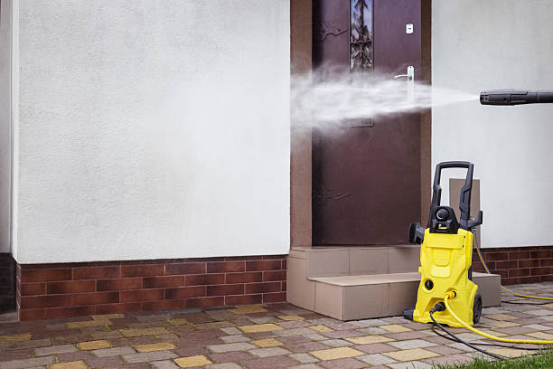
EPA and Industry Reference Standards: What is Compliant Wastewater Treatment?
In EPA and cleaning industry literature, some “Best Management Practices” (BMPs) provide us with guidance. The following points are worth considering and practicing:
- of non-stormwater drainage (e.g., washwater, motor washwater) directly into storm drains (MS4) are prohibited . EPA requires that washwater activities include controls, treatment, recycling, or other measures to minimize the amount of pollutants that enter storm drains.
- Discharge into the public sanitary sewer system is preferred , but usually requires pre-treatment (removal of sediment, grease, neutralization of chemicals, etc.). In some areas, mobile cleaner/pressure washer contractors are required to discharge wastewater into the municipal sewer system rather than into rainwater .
- Use water recovery/filtration/sedimentation/separation systems : Set up water collection tanks, sedimentation tanks, oil-water separators, filters, wet electric suction equipment, etc. The “Mobile Power Washing Best Management Practices” guide published by WSSC Water recommends the use of these facilities to protect the environment and comply with regulations.
- Build weirs/dams/barriers/blocking materials : Place barriers near the drain outlet to prevent wastewater from flowing directly into the storm drain. Oak Lodge Water Services recommends using berms, drain covers, absorbent pads, pipe plugs, and other devices to prevent sewage from entering the system.
- Prioritize biodegradable/low-toxic/pH-neutral cleaning agents to reduce the chemical burden entering wastewater. Gorilla Kleen’s guidelines state that environmental safety, degradability, and potential for surface damage should be considered when selecting a cleaning agent.
- Intervention Cleaning/Pre-treatment of Soil : Before flushing with water, sweep, blow, vacuum, etc. to remove loose surface debris and reduce the amount of solids entering the water. Oak Lodge also recommends “dry cleaning” or adsorption treatment as a priority.
- Recording and monitoring : Record wastewater flow, treatment methods, discharge locations, filtration conditions, etc. for compliance inspection and self-inspection.
These BMPs are widely recognized in the industry, and many local governments and water agencies use them as assessment criteria for licensing or supervision.
Operational Strategy: How to Achieve Eco-Friendly Drainage with an Electric Pressure Washer
With theoretical guidance, the key lies in how to implement it in specific scenarios. The following is a practical process suggestion:
Step 1: Site preparation and wastewater flow management
- Plan the water flow path : clarify the flow direction of wastewater before cleaning, and prevent water from flowing directly into sensitive points such as storm drains and roadside drains.
- Set up temporary water retaining berms/frames/covers : Use waterproof canvas, plastic sheets, sandbags or expandable tubes to collect wastewater.
- Clean dry first : Use a broom, blower, vacuum, etc. to remove loose dust, fallen leaves, and dirt. This will result in less water and suspended solids in subsequent rinses.
- Adsorption/dry material pretreatment : For oil stains and chemical residues, they can be treated with adsorbents (sand, sawdust, cat litter, commercial oil absorbent pads, etc.) to prevent them from entering the water flow.
Step 2: Wastewater collection and preliminary treatment
- Sump/Pit : A ditch is dug in a low-lying area or artificially to divert wastewater into a controllable area.
- Oil-water separator/sedimentation tank : Allow the wastewater to undergo simple sedimentation to remove heavy suspended particles, grease, etc.
- Coarse filtration/fine filtration : Use sand filters, gauze, cloth filters, carbon filters, etc. to further clean the water.
- Neutralization/Dilution/pH Adjustment : If alkaline, acidic, bleaching or other chemical agents are used, neutralization should be performed to control the pH within an acceptable range.
Step 3: Compliance discharge or reuse
- Discharge into the municipal sewage system : if permitted by the local authorities and the sewage system can accept the water volume and quality (subject to meeting local sewage treatment standards).
- Reuse/Recycling : Within a community or facility, some wastewater can be used for flushing, irrigation, and cleaning of non-sensitive areas.
- Safe discharge to permeable land/green space : Where permitted by law, relatively “clean” treated wastewater can be directed to lawns or soil infiltration areas, but only after verification that it is harmless. Guidelines such as Oak Lodge recommend that “if access to sewer pipes is not possible, the washwater be directed to non-sensitive green space.”
- Finally, absorb the remaining water : use a wet electric suction device or a dry cloth or mop to absorb the remaining small amount of water to prevent the remaining water from spreading.
Step 4: Cleaning agent selection and minimizing chemical contamination
- Use a biodegradable/oxidative/enzymatic/phosphate-free/chlorine-free/pH-neutral or slightly acidic or alkaline cleaning agent.
- Strictly follow the dilution instructions and do not exceed the concentration.
- The cleaning agent should have an SDS (Safety Data Sheet) or environmental certification.
- Try to avoid using chemicals on rainy days or wet ground to reduce the risk of spread.
Step 5: Monitoring records and compliance preparation
- Record the water consumption, wastewater treatment method, discharge destination, filtration, monitoring data, etc. for each cleaning.
- If possible, take photos of the site layout, wastewater flow, and collection plan as evidence of compliance.
- Understand and comply with local (municipal/county/state/national) wastewater discharge regulations and permit requirements. Pressure washing industry literature emphasizes that local regulations should be investigated before any cleaning is performed, as many local regulations are more stringent than the EPA.
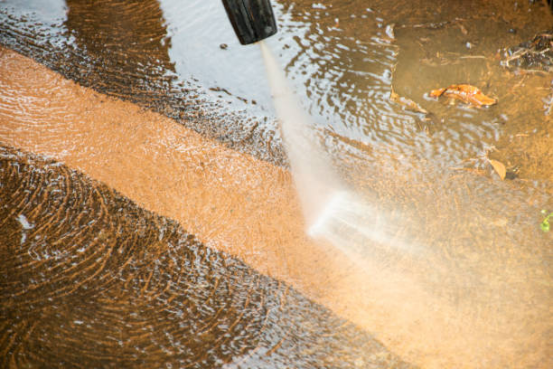
Equipment and technology recommendations: Powerful wash water recovery and treatment system
To build a standardized and operable system for wastewater treatment, the following equipment and design ideas are worth paying attention to:
- Mobile water recovery vehicle/water recovery device : an all-in-one machine with pump, sedimentation tank, filter, pipe water collection, wet electric suction, etc.
- Modular filter : Pluggable and replaceable multi-stage filter (coarse, medium and fine) for easy maintenance.
- Adjustable sedimentation tank/oil-water separator : designed sedimentation time, oil separation structure, floating oil collector.
- Dosing pump + neutralizer injection system : automatically measures wastewater pH and injects neutralizers such as sodium bicarbonate, acid buffer, etc.
- Dialysis/activated carbon/biological filter bed : as a means of advanced treatment to improve the final discharge water quality.
- Expandable reuse network : Recycle some of the rinse water for pre-flushing, irrigation, or flushing of insensitive surfaces.
When designing this type of wash water recovery and treatment system , it is necessary to consider the trade-offs between cost, equipment maintenance, floor space, degree of automation and user convenience.
Real challenges and implementation suggestions
Despite having a comprehensive set of theories and equipment, there are still many challenges in actual implementation. The following are common problems and suggestions:
- High initial costs/long payback period : Purchasing water recycling machines, filters, water collection systems, and laying pipes requires significant investment. It is recommended to start with small-scale pilot projects in key areas.
- Regulatory Variation/Inconsistent Local Enforcement : Even if you follow EPA guidelines, you must still comply with local municipal, county, and state regulations, which can vary significantly from region to region.
- Complex operation/high maintenance requirements : Filters, sedimentation tanks, pumps, and pipelines require regular cleaning, filter replacement, and maintenance, which requires high professionalism from the operator.
- Difficulty in treating chemical residues : Some cleaning agent components may be difficult to remove by simple filtration and neutralization and require more complex treatment.
- Water volume/load limitation : Large-scale cleaning may generate a large amount of wastewater, which is difficult to treat in one go.
- Social cognition and cost-sharing : Users, properties, and owners may find it difficult to understand or support this “invisible cost”.
Therefore, implementation recommendations include:
- Prioritize recycling in key and sensitive areas (e.g., public entrances, sculptures, exterior walls);
- Seek public/government support or subsidies to alleviate initial cost pain points;
- Adopt a modular and scalable system so that it can be gradually upgraded according to scale;
- Train operators and develop standard operating procedures (SOPs);
- Promote community/user awareness and make “environmentally friendly drainage” a part of brand value.
Let the cleaning action leave no trace of pollution
The benefits of using an electric pressure washer are efficiency, cleanliness, and controllability. However, if the drainage is not properly managed afterward, contamination can be introduced into the environment. This is a necessary step from “clean” to “clear.”
With compliance regulations, environmental protection technologies, and equipment becoming increasingly mature, wash water recycling is not only a good practice but also a responsibility and a trend. Every time we release the spray gun, we should make that water flow more responsible—not only cleaning stains but also protecting the water.