The Electric Pressure Washer’s New Role in the Environmental Community: Clean, Shared, and Sustainable Living

In the morning breeze, community paths, public benches, children’s play areas, planted fences, and art sculptures are slowly being restored from dust and pollution. Sunlight streams in, and the stone pavement gleams with a new luster. This is more than just a cleanup; it’s an aesthetic practice that reflects community spirit and future lifestyles. In this process, the Electric Pressure Washer is transforming from a “cleaning tool” to a “community public resource.”
In the context of sustainable community development, electric pressure washers can bring multiple benefits to shared spaces: lower carbon emissions, greater efficiency, cleaner living, and greater cohesion. This article will comprehensively explore the potential paths and practical directions for electric pressure washers in environmentally friendly communities from three perspectives: environmental protection and water resource management, sharing/service models, and community aesthetics and impact.
The Cleaning Paradox of Eco-Friendly Communities: Why Traditional Cleaning Methods Are Unsustainable
In many communities, public space cleaning still relies on manual watering cans, sweeping, garden sprayers, or occasionally outsourcing high-pressure washing. These methods present several challenges:
- High water consumption and waste : Using hoses to spray water and manual operations often make it difficult to control the flow rate, resulting in serious water waste.
- Chemical contamination risk : Many cleaning chemicals in public areas inevitably enter stormwater systems, carrying residues and contaminants. CuttingEdge Window Cleaning Services warns that run-off from cleaning can potentially flush chemicals or suspended solids into sewers and rivers, causing water pollution.
- Carbon emissions and noise nuisance : When operating in public spaces, fuel high-pressure engines produce high noise and a lot of exhaust gas, which is inconsistent with the temperament and standards of an environmentally friendly community.
- Operating costs and stability are difficult to control : hiring outsourced teams, traffic scheduling, and water supply may all lead to cost and time uncertainties.
Therefore, under the guidance of the concept of environmentally friendly communities, communities also need to think about ecology, sharing, energy consumption, and public governance simultaneously in the surface maintenance behavior of “cleaning”.
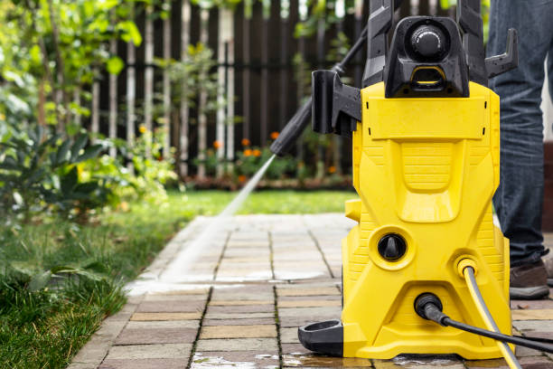
Electric Pressure Washer: An Upgraded Choice for Low-Carbon Cleaning Tools
Electric drive + low emissions
Compared to gasoline-powered high-pressure washers, electric pressure washers offer inherent advantages in terms of emissions and noise. Utah Pressure Washing’s community cleaning practices indicate that using electric pressure washers can significantly reduce exhaust emissions and help improve air quality, especially in urban areas or within residential communities.
In places like California, regulations even prohibit the sale of certain classes of gasoline-powered equipment, driving the washing industry toward all-electric technology. PowerWash.com has launched the “California Skid,” an all-electric hot water and softwash system that complies with California’s Small Off-Road Engine (SORE) regulations.
Therefore, deploying Electric Pressure Washer in environmentally friendly communities is not only an upgrade at the equipment level, but also a practical implementation of the community’s carbon neutrality vision.
Water-saving technology and recyclable water system
Wastewater management during cleaning is a sensitive area for communities. Sustainable cleaning techniques emphasize “cleanliness without harming the environment.” GreenCityTimes recommends low-flow equipment, recycling and filtration systems, and rainwater collection systems in its sustainable cleaning guide.
Specific practices include:
- Water recovery device : During the cleaning process, part of the sewage is closed and the wastewater is intercepted for filtration, sedimentation and reuse.
- Low-Flow Nozzles : Choose nozzle models that reduce water usage but maintain impact through premium design.
- Rainwater/graywater utilization : Communities can introduce rainwater collection systems into cleaning systems, giving priority to non-potable water for public area cleaning.
- Green cleaning agents : Choose biodegradable, phosphate-free, and chlorine-free cleaning agents to avoid negative impacts on vegetation and water bodies. Carolina Power Wash’s guidelines emphasize the importance of choosing soil- and water-safe cleaning agents for environmentally friendly cleaning.
Through these strategies, the Electric Pressure Washer can no longer be seen as a “high-pressure water-consuming energy consumer” in the community, but can become a representative of a “smart water-saving device.”
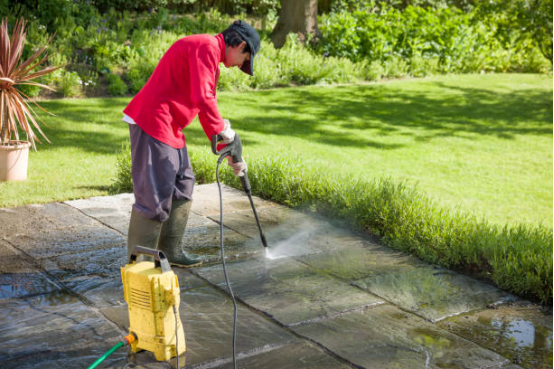
Sharing Model and Community Governance: Making Cleaning a Public Service
In traditional communities, cleaning work is either undertaken by the property management or outsourced to cleaning companies. However, in environmentally friendly communities, there is a greater opportunity to incorporate electric pressure washers into a “shared public resource” framework and become an integral part of community governance.
Shared equipment + public participation
Imagine the following scenario: Communities establish shared high-pressure cleaning stations (small cleaning pods similar to bike-sharing stations), with community administrators or volunteers responsible for scheduling, registering, and maintaining access. Residents or community service teams can reserve time slots for cleaning sidewalks, community entrances, hedges, public art sculptures, and more.
This shared design has several advantages:
- Improved resource utilization : One device can serve multiple areas, reducing duplicate purchases and idle waste;
- Cost transparency : Community budgets can package maintenance, consumables, and rentals into public funds, making cleaning expenses more manageable.
- Sense of participation + sense of belonging : When residents see their community being “cleaned by themselves”, they will have a stronger sense of identity with the community;
- Standardized operations and safety management : Through training, appointment systems, and responsibility systems, cleaning is no longer a sporadic task but an institutionalized service.
In higher-end or exemplary environmentally friendly communities, cleaning needs can also be incorporated into the community digital platform: for example, a module can be set up in the community app where users can report areas that need cleaning, make reservations for shared cleaning equipment, and view cleaning history and status.
This model— a community cleaning sharing system —is a possible path for future community services.
Outsourcing collaboration + environmental protection contract
Even if some communities still outsource cleaning, they can include electric pressure washers as a contractual requirement: requiring the use of electric high-pressure washers, green cleaning agents, and wastewater disposal solutions. Property owners or community managers can specify these green standards during bidding to encourage service providers to upgrade.
Many commercial cleaning companies are also gradually providing “eco-friendly cleaning” services (Eco-friendly pressure washing), focusing on water resources, emissions, and chemicals.
Through contractual constraints and supervision, the high efficiency and low environmental impact of the Electric Pressure Washer can be built into a “competitive threshold” for community services, driving the industry as a whole towards green upgrades.
Community Aesthetics and Public Scenes: Cleanliness is Image
From the perspective of environmental aesthetics, the appearance of a community is not only derived from gardens, architecture, and public art, but also from the most fundamental visual vocabulary of “cleanliness.” Here, the role of the electric pressure washer is not just a tool, but also an integral part of the community’s image.
Reshape the finish of public facilities
Public seating, paving, sculptures, fences, signage, children’s play equipment, and more have accumulated dust, algae, and pollution over the years, leaving them visually fatigued. Regular high-pressure water cleaning refreshes these features, highlighting the original colors, lines, and details of the materials.
Visual designers often say that environmental beauty is a form of “background comfort,” meaning that when visitors or residents walk through a community, they don’t notice any disturbances, yet subconsciously perceive order and cleanliness. Electric pressure washers help communities maintain this “unnoticed cleanliness,” becoming an invisible symbol of quality of life.
Ecological landscape and water boundary cleaning
Water features, ponds, and wetland trails are common landscape elements in eco-friendly communities. Long-term accumulation of dust and algae along the boundaries of these areas (stone banks and waterside paving) can detract from the ecological landscape’s appeal. Gently washing these hard edges with an electric pressure washer can restore the stone’s texture and control algae growth without extensively disturbing the water.
This cleaning method is gentler and has lower ecological impact than heavy chemical cleaning.
Enhance brand and community awareness
If a community can publicly demonstrate its environmental commitment to using electric pressure washers, transparent water management practices, and a shared water system, it can cultivate a brand image of an “eco-friendly community” among residents and visitors. Similar to the concepts of “zero-waste communities” and “green blocks” in cities, washing methods can become part of a community’s cultural identity.
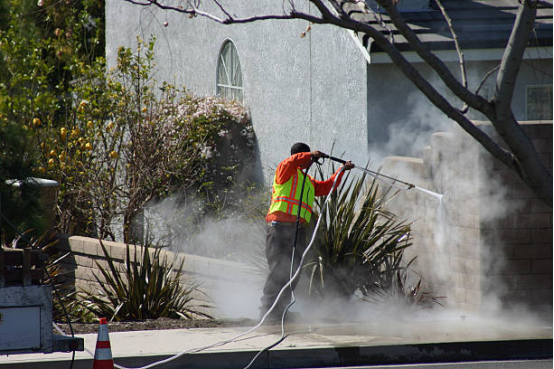
Practical Challenges and Implementation Suggestions
This route seems promising, but in practice, you will encounter the following bottlenecks and considerations:
- Equipment costs and maintenance burden : High-specification electric high-pressure machines, water recycling facilities, and a shared dispatch system require initial investment. Communities should assess the payback period.
- Linking wastewater discharge regulations with stormwater systems : Local wastewater/stormwater diversion regulations must be met to avoid illegal discharges.
- Operational safety and responsibility demarcation : The use of shared equipment requires training and the signing of a responsibility agreement to prevent misuse, water damage, and injury accidents.
- Season/Weather Limitations : Cleaning efficiency or effectiveness may be limited during cold, rainy, or dry seasons.
- Community ecological sensitivity : Some communities may have plants, ground cover, and insect ecosystems, and cleaning plans must take ecological protection into consideration.
To this end, some implementation suggestions include:
- First, pilot shared cleaning equipment in small areas (community entrances, main road pavement, and sculpture bases);
- Establish cleaning operation standards (pressure, nozzle, safety distance, cleaning time) and train operators;
- When selecting equipment, give priority to products that are modular, easy to maintain, and have strong water-saving characteristics;
- Collaborate with local environmental protection, water affairs, and property management departments to ensure that wastewater treatment and chemical use comply with local regulations;
- Regularly evaluate the utilization rate, maintenance log, and cost-effectiveness of the shared system, and gradually expand the application area.
Electric Pressure Washer is an “invisible assistant” for sustainable community living
In the construction of environmentally friendly communities, green plants, rain gardens, and low-carbon buildings are often the focus; however, the cleanliness of public spaces is also part of the warmth, order, and dignity of the community . In this context, it plays the role of “cleanliness is a public asset”: it serves the ecology and connects people’s hearts.
By incorporating it into community governance, shared resource systems, water management systems and aesthetic design, cleaning may no longer be a tedious and passive task, but an autonomous, participatory and sustainable part of the community.