How to reduce the psychological burden of cleaning with an electric pressure washer

Many cleaning efforts don’t begin because the dirt is unbearable, but because “it will only get worse if I leave it on.” The layer of dust, water stains, and footprints on the floor can be irritating to look at, yet the thought of cleaning remains. The problem often isn’t the dirt itself, but rather that cleaning is psychologically perceived as a “high-cost activity.”
When cleaning is expected to be time-consuming, laborious, and uncontrollable, people naturally choose to avoid it. It is precisely within this psychological framework that the electric pressure washer is repeatedly mentioned—not because of its power, but because it changes people’s psychological expectations of cleaning.
Table of Contents
Procrastination in cleaning isn’t laziness; it’s the brain avoiding stress.
A frequently cited viewpoint in behavioral psychology is that people instinctively avoid tasks that are high-energy-consuming and offer low immediate rewards. Cleaning is a prime example. Before you begin, it’s difficult to accurately predict how long it will take; during the process, the feedback is sporadic and discontinuous; and upon completion, the sense of accomplishment is not particularly strong.
This is also why cleaning motivation is hard to maintain. It’s not that people don’t want a clean environment, but rather that cleaning is perceived as “uncontrollable” and “unprofitable.”
The change brought about by the electric pressure washer here doesn’t come from the cleaning result but from the experience of the process. The cleaning path becomes more intuitive: turn on the device, aim at the surface, and the stains are pushed away. The feedback is immediate, continuous, and visual. This instant reward perfectly targets the brain’s reward mechanism.

When cleaning becomes “predictable,” the psychological burden begins to decrease.
Many people’s resistance to cleaning stems from uncertainty. Will it make it dirtier the more I wipe? Will I have to redo it repeatedly? Will I waste an entire afternoon on it?
These questions magnify the task before it even begins.
Electric pressure washers often provide a clear sense of “boundaries” during use. The cleaning area, time required, and results are all easier to predict before starting. This predictability directly lowers the psychological barrier to reducing cleaning stress.
In some user experience sharing, we can see that cleaning behavior has shifted from a “planned event” to an “incidental action.” Instead of waiting until the weekend to deal with everything, it’s tackled as soon as stains are discovered. With the psychological burden removed, there’s naturally no longer a need to force oneself to start.
Tools change not only efficiency but also a sense of identity.
One easily overlooked aspect is that tools can influence how people perceive themselves. When cleaning relies on outsourcing or complex preparation, people are more likely to position themselves as “passively accepting changes in the environment.”
The electric pressure washer gives you a sense of “I can handle this.” You don’t need complex skills, nor do you need to rely on others. Just press the switch, and the problem begins to be solved.
This shift in identity is closely related to the home organization mindset. The environment is no longer a source of stress but rather something that can be managed. Many studies in the psychology of organization have pointed out that when people have a greater sense of control over their space, their sense of order can conversely affect their emotional stability.

Emotional feedback is more important than cleanliness.
The true value of cleaning often lies not in “how clean it is,” but in “what happens during the cleaning process.” Traditional cleaning methods involve both physical and mental exertion, easily leading to fatigue and a decline in mood. By contrast, tools such as an electric pressure washer tend to change the emotional rhythm of cleaning itself.
When using an electric pressure washer, visible results appear in a very short time. Stubborn dirt lifts away almost instantly, and that immediate transformation creates a sense of progress. Seeing such clear changes encourages people to continue the task—what was originally intended as cleaning only a small area often expands into a more thorough cleanup. This positive feedback loop is central to maintaining long-term cleaning motivation.
When comparing DIY cleaning with professional services, some people argue that “professional is more convenient.” However, convenience does not always equate to emotional relief. For many users, personally operating an electric pressure washer and watching surfaces gradually restore their original appearance provides a direct sense of control and accomplishment. That sense of hands-on effectiveness can function as a form of emotional regulation in itself, turning cleaning from a burden into a satisfying, self-directed process.
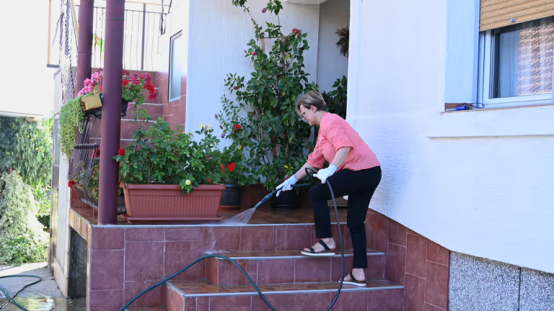
Cleaning is no longer about “emptying your mind” but about “organizing your thoughts.”
Many people have a similar experience after cleaning: the space becomes cleaner, and their thoughts become clearer. This is no coincidence. There is a clear link between environmental order and cognitive load. A cluttered environment will continuously consume your attentional resources, even if you don’t consciously look at it.
When an electric pressure washer makes cleaning easier to initiate, the frequency of tidying up naturally increases. The result isn’t more frequent “cleaning,” but rather less exposure to subtle environmental disturbances.
The difference between resistance and initiative often lies in just the first step.
People often think that changing habits requires strong willpower, but when it comes to cleaning, the real turning point is often “how easy it is to start.”
When the cost of starting is low, resistance naturally decreases; when the feedback in the process is clear enough, motivation will generate itself.
An electric pressure washer doesn’t “do the cleaning” for you; it subtly adjusts your relationship with cleaning. It breaks down the originally arduous task into a series of controllable and visible small actions.
Perhaps the next time you face a space that needs cleaning, you’ll feel differently. Instead of agonizing over whether to start, you’ll take action more quickly. Cleaning will no longer be an emotional burden but a way to organize your life. The issue might not be whether you’re diligent, but whether the tools you have make it worthwhile to take that first step.