Never pour bleach directly into an electric pressure washer.

Stop! Why Bleach is Poison for Your Electric Pressure Washer
This is a typical spring cleaning scene: you look at the disgusting green mold (mildew) on the exterior walls of your house or the stubborn black stains on your terrace, and the thought immediately pops into your head: “I need to use something drastic.”
So you go to the laundry room, grab a bottle of Clorox bleach, and head over to your brand-new electric pressure washer. You see the lid of the machine labeled “Soap Tank” and think, “Perfect! Pour the bleach in, spray it out, and the stains will be gone instantly.”
Please stop immediately.
Put down the bleach in your hand. Don’t take this step if you don’t want to have to throw the machine in the trash in the coming weeks or spend hundreds of dollars to replace the pump head.
As an industry observer who has dismantled countless machines corroded and rendered unusable by chemicals, I’m here to tell you a harsh truth: while bleach is a miracle cure for mold, for the heart of most household electric pressure washers, it’s pure poison.
Today, we’ll delve into why this is devastating and how to safely use the correct “bypass” if you absolutely must use bleach.
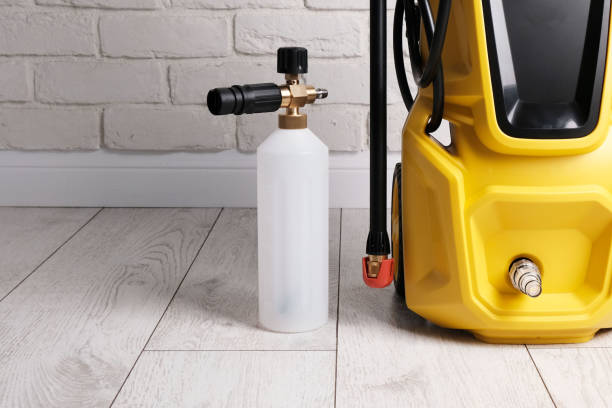
A deadly chemical reaction: Sodium hypochlorite vs. a pump head.
To understand why this is a disaster, we must first talk about chemistry. The main active ingredient in bleach is sodium hypochlorite, which has extremely strong oxidizing and corrosive properties.
When you pour this liquid into the on-board soap tank, you must understand how the machine works. For most consumer-grade electric pressure washers, the liquid in the on-board tank is mixed at or inside the pump. This means that the bleach flows through the most delicate and vulnerable core components of the machine.
This is the beginning of the nightmare of pressure washer pump corrosion.
Seal failure: The pump body is filled with various rubber seals and O-rings. The rubber materials used in most household pumps (such as nitrile rubber and Buna-N) are simply not resistant to long-term exposure to bleach. Bleach causes the rubber to harden and crack rapidly, eventually leading to seal failure. Once the seal fails, water can seep into the motor’s crankcase, turning the oil-lubricated bearings into a rusty mess.
Metal corrosion: Even if your pump head is made of brass or aluminum, high concentrations of oxidants can accelerate pitting on the metal surface.
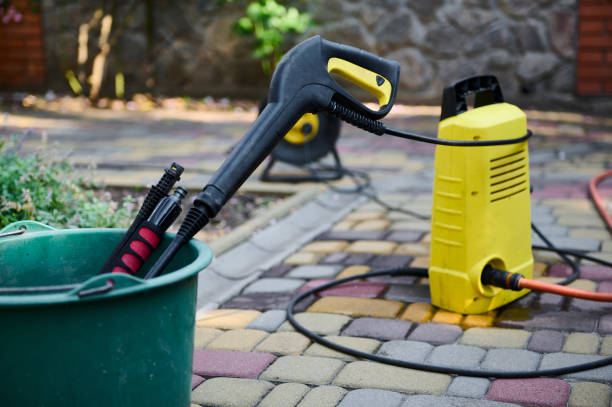
Common Misconceptions: The Pitfalls of On-board Tanks
Many users would argue, “Doesn’t the instruction manual say that you can use detergent?”
Yes, but the key word is “cleaner.” Most manufacturer-certified cleaners for electric pressure washers are mild, biodegradable surfactants that are safe for the rubber components inside the pump.
Bleach is not a cleaning agent; it is a strong corrosive agent.
When you search for “can you put bleach in a pressure washer tank,” you’ll find many “experts” on forums saying they do it frequently without problems.
This is usually due to survivorship bias, or they’re using industrial-grade machines (equipped with specially designed corrosion-resistant seals), or they’re just lucky; their machines break down after a few weeks, and they assume it’s a quality issue, completely unaware that the bleach is the culprit.
For ordinary users like us, never gamble with the odds using your devices.
The correct solution: Downstream Injector
So, are we really helpless when faced with walls covered in mold? Of course not. What we need to do is change the “location” where the chemicals enter the water flow.
What you need is a method that allows chemicals to bypass the pump. In the professional field, this is known as a “downstream injector.”
The difference between a pressure washer chemical injector and a soap tank lies in:
| Feature | Description |
|---|---|
| Soap Tank | Chemicals are mixed before or during the pump (upstream). |
| Chemical Injector (Downstream Injector) | Chemicals are drawn in after the pump through the Venturi Effect on the high-pressure hose. |
By using an external downstream injector, high-pressure water flows through a special connector, creating a vacuum that draws bleach from the external container and sprays it directly out.
In this process, the corrosive liquid never comes into contact with your pump head, motor, or internal seals. It only flows through your high-pressure hose and spray gun—parts that are much cheaper to replace.
If you’re looking for a safer, more professional cleaning method, here are some good electric pressure washers. It serves as a valuable benchmark. A small accessory costing just a few tens of dollars allows you to safely use a variety of powerful chemicals without worrying about damaging expensive machinery.
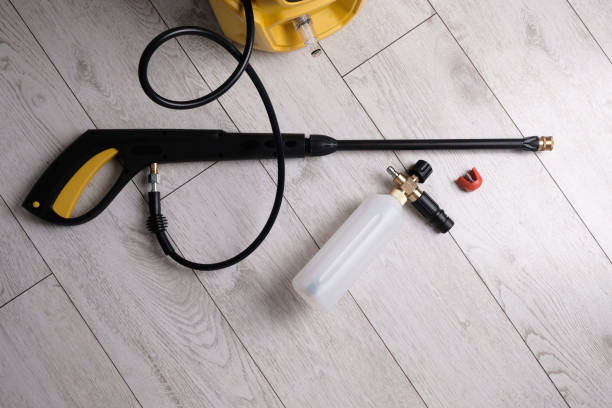
Ultimate Solution: The Ingenious Use of a Foam Cannon
For most home users, a simpler and more intuitive solution than a downstream syringe is to use a foam cannon that is attached to the end of the spray gun.
This is actually a form of indirect “downstream” processing. You fill a foam bottle with the bleach mixture and hang it directly on the front of the spray gun. When you pull the trigger, water flows out of the electric pressure washer, mixing with the chemicals in the bottle just before leaving the nozzle.
This is not only absolutely safe (because the chemicals don’t pass through the machine at all), but it also produces thick foam, allowing the bleach to stay on vertical walls for a longer time, thus doubling the sterilization effect.
If you’d like to learn more about electric pressure washer application techniques, we recommend consulting our detailed guide. Mastering these techniques will allow you to handle mold like a pro while ensuring zero damage to your equipment.
What if you’ve already poured bleach on?
If you’re sweating bullets while reading this because you just washed your driveway with a machine full of bleach, don’t panic; it’s not too late to fix it:
- Empty immediately: Pour out all the remaining liquid from the water tank.
- Thorough rinsing: Fill the pump with clean water and run the machine continuously for at least 5-10 minutes. You need to thoroughly rinse every corner of the pump body with plenty of clean water to dilute and remove any residual sodium hypochlorite.
- Lubrication protection: Run the machine once with a dedicated pump body protectant (Pump Saver) or antifreeze containing lubricating components to apply a layer of protective oil to the damaged seals.
Respect chemistry, protect assets
Electric pressure washers are the king of physical cleaning, but when it comes to chemical cleaning, they need the right auxiliary tools.
Don’t be lazy and pour bleach directly into the machine. That’s not only a death sentence for the machine but also irresponsible towards your wallet. Whether you’re cleaning siding, decking, or a driveway, remember this simple rule:
Highly corrosive chemicals must always be added “downstream” from the pump.
Take immediate action (Actionable Tip)
Go check your garage. If you’re planning to clean the exterior walls this weekend, order a universal foam cannon accessory online now, or head over to a hardware store for an external chemical inhalation kit. This small investment is the wisest insurance you can have for this expensive appliance.
FAQ
Can you put bleach in a pressure washer tank if I dilute the bleach?
The short answer is still not. Even diluted bleach (e.g., 1:10) can cause irreversible pressure washer pump corrosion to the internal rubber seals of consumer-grade electric pressure washers with prolonged exposure.
The risks far outweigh the convenience; always use an external foam container or downstream syringe.
Since an onboard water tank cannot be used, which is more convenient in actual operation: a pressure washer chemical injector or a soap tank?
The airborne Soap Tank excels in its all-in-one design, making it suitable for spraying mild car wash liquids.
However, the chemical injector excels in its versatility and safety. For heavy-duty tasks requiring the use of bleach to remove mold or degreaser, the downstream injector is the only correct choice because it physically protects your pump body.
Besides bleach, what other chemicals should not be poured into an electric pressure washer?
Besides bleach, never pour in any strong acids (such as hydrochloric acid or sulfuric acid, commonly used for cleaning bricks), strong alkalis (industrial degreasers), or cleaning agents containing ammonia.
Furthermore, never pour in undissolved powdered cleaning agents, as the particles will instantly wear down the plunger and check valve. Always use liquid cleaning agents labeled “Pressure Washer Safe” (suitable for pressure washers).