Don’t be fooled by PSI: A deep dive into the secrets of Electric Pressure Washer motors (Induction vs. Universal)
You prepare to wash your driveway. You connect the hose, turn it on, and then—a piercing scream rips through the neighborhood’s tranquility. Half an hour later, the machine starts to heat up, even emitting a smell similar to burning plastic.
This isn’t because you were unlucky enough to buy a defective product, but because you may have only focused on the huge PSI number on the packaging box while ignoring the heart of the machine.
electric pressure washer returns, and the reasons are almost strikingly consistent: motor failure. In this market, PSI (pounds per square inch) is often a marketing ploy to mislead newcomers, while the motor type is the absolute truth that determines whether a machine is a “durable tool” or a “disposable toy.”
Today, we’ll disassemble the casing and delve into the fundamental differences between universal and induction motor pressure washers.
Universal Motor: The High-Speed “Screamer”
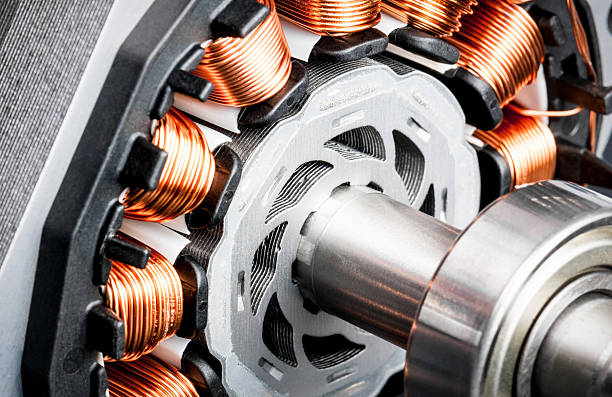
The “universal motor” is used in 80% of household electric pressure washer products on the market.
The name sounds impressive, but it’s actually no different from the motors you’d find in a household blender or vacuum cleaner. You’ll find that this motor is designed for “sprints,” not “marathons.”
From a technical standpoint, a general-purpose electric motor conducts electricity through the physical friction between carbon brushes and a commutator. To generate sufficient water pressure, it must rotate at extremely high speeds—typically between 10,000 and 20,000 RPM.
This structure introduces two unavoidable physical drawbacks:
- Noise pollution: High speed combined with physical friction typically generates noise levels above 90 decibels. This is not just loud noise but a high-frequency howling sound that can easily cause auditory fatigue.
- Short lifespan: Friction generates heat, which accelerates wear. This is why many entry-level electric pressure washer manuals recommend “resting every 20 minutes of use.”
If you are planning a long-term cleaning solution for your home, you need to realize that devices that rely on this type of motor are unlikely to be long-term companions.
Induction Motor: The Silent “Long-Distance Runner”
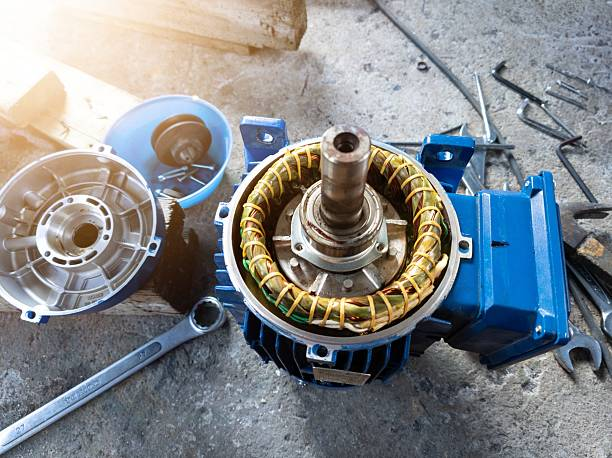
Now, let’s look at the other side of the coin. As you move from the entry-level area costing tens of dollars to the professional area costing hundreds of dollars, you’ll notice a sudden increase in the weight of the equipment.
This usually means you’ve encountered an electric pressure washer equipped with an induction motor.
Induction motors operate on a completely different principle. They have no carbon brushes, eliminating friction from physical contact. They use a rotating magnetic field generated by the stator windings to drive the rotor. This design is also known as a brushless electric pressure washer.
Why is it the top choice for advanced users?
- Low speed, high torque: Induction motors typically operate at only 2,800 – 3,400 RPM. Low speed means less vibration and lower noise (usually 10-15 decibels lower). You can even have a normal conversation with someone next to you while the machine is running.
- Heat dissipation and cooling: Since there is no friction to generate heat, and many high-end models use a water-cooling structure (using water to enclose the motor casing for heat dissipation), this type of motor can work continuously for several hours without overheating.
This is like comparing a fully loaded truck to a motorcycle: the motorcycle (general motor) has to rev up to high speeds to maintain its speed, while the truck (induction motor) can easily output huge torque at low speeds.
The brutal arithmetic of lifespan and cost
This is data that most manufacturers are unwilling to tell you directly. When we delve into the analysis of electric pressure washer lifespan by motor type, the difference is astonishing.
| Motor Type | Average Expected Lifespan |
|---|---|
| General Motors | Approximately 50 to 100 hours. (If used for one hour each weekend, it should last about two years—which is usually around the end of the warranty period.) |
| Induction motor | Typically over 500 to 1000 hours. (If properly maintained, it can even be passed down to your next generation.) |
Of course, this durability comes at a price. Induction motors use a significant amount of copper wire and silicon steel sheets, resulting in higher costs and greater weight. An induction motor cleaning machine often weighs more than twice as much as a general-purpose motor model.
Many people are deterred by the bulky appearance of these machines when making a purchase, but in reality, weight signifies solid construction. Instead of imagining which machine is more suitable for your garage, explore electric pressure washer technology directly and see the industrial aesthetics and quality of these “beasts” equipped with induction motors in action. You’ll find that this weight actually gives you a sense of reassuring security.
Why can’t I see any difference in the parameter table?
You might ask, “If induction motors are so good, why do the PSI and GPM on the specifications sheet look almost the same?”
This is a classic marketing trap. General-purpose motors can “squeeze” very high PSI readings in a short time through extremely high speeds, but these are often peak data, not rated operating data.
This is similar to a weightlifter (induction motor) being able to lift 50 kilograms all day, while an ordinary person (general-purpose motor) can also lift 50 kilograms instantly but will be exhausted after a few seconds.
When you really start dealing with large areas of moss or stubborn stains, the continuous output capability of an electric pressure washer is far more important than its instantaneous burst of power.
Your choice determines your experience.
In the world of electric pressure washers, there is no such thing as truly “good value for money.” You are actually making a choice: do you choose a lightweight, inexpensive, but noisy “consumable” with a lifespan of only 60 hours? Or do you choose an expensive, heavy, but quiet “asset” that can accompany you for ten years?
If you only wash your bike occasionally, a general-purpose motor is perfectly fine. But if you have a large yard or patio, or if you’re someone who’s particular about the quality of your tools, be sure to choose an induction motor.
Finally, here’s an expert tip for identifying this without disassembling the device:
When you go to a physical store or receive a package, try lifting the machine with one hand. If you can lift it effortlessly, like carrying a briefcase, it’s 99% likely a general-purpose motor; if it feels heavy and you even need both hands to maintain your balance, congratulations, you’ve probably bought a durable and high-quality induction motor.
FAQ
1. Are electric pressure washer motors still general-purpose motors on the market?
This is purely a matter of cost and market positioning. General-purpose motors are extremely inexpensive to manufacture and lightweight, making them easy to transport and sell. For most ordinary consumers who only use their devices once or twice a year, the low price is the primary attraction. Manufacturers sacrifice lifespan (the data on electric pressure washer lifespan varies greatly depending on the motor type) in exchange for a more competitive price tag.
2. How can I confirm that the device I’m interested in is a brushless electric pressure washer?
If the product description doesn’t explicitly state “Induction Motor” or “Brushless,” you can check the weight specifications. Generally, if a machine has a pressure rating of around 2000 PSI but weighs less than 20 pounds (about 9 kg), it’s almost certainly a general-purpose motor. True induction motor machines typically weigh 30 pounds or even more than 40 pounds.
3. In terms of cleaning effectiveness, is there a fundamental difference between universal and induction motor pressure washers?
From a purely instantaneous water pressure (PSI) perspective, the difference is minimal. However, the difference is significant in the actual cleaning experience. The induction motor provides a more stable water flow and pressure, eliminating pressure fluctuations. More importantly, due to its lower noise level, you can focus more intently on long cleaning sessions without being annoyed by the machine’s screeching noise, which indirectly improves the thoroughness of the cleaning and the final result.
Related Posts
Why is it necessary to perform the “release pressure” step after using an electric pressure washer?
-
Posted by
 Marcus Whitfield