Growth Opportunities in the Electric Pressure Washer Rental Market

In an era of burgeoning equipment rental economies, professionals are increasingly dissatisfied with simply purchasing large cleaning equipment outright. Faced with ever-changing project needs and cost pressures, electric pressure washer rental solutions are demonstrating tremendous potential. This article will delve into the growth path of electric pressure washer equipment in the rental market from multiple perspectives, including rental models, market trends, brand opportunities, and operational strategies.
Why is equipment rental becoming the new standard for cleaning tools?
The leasing economy has grown rapidly over the past decade. The entire equipment leasing market is considered a prime example of the “on-demand economy.” Data shows that the North American equipment leasing market is projected to grow by approximately 5.7% to reach about $82.6 billion by 2025. Meanwhile, the construction equipment leasing market is expected to grow to approximately $201.8 billion by 2034, with a compound annual growth rate of approximately 4.4%.
In this macroeconomic environment, equipment with flexible usage cycles, low investment thresholds, and efficient operation—such as the Electric Pressure Washer—possesses a clear market advantage. Leasing services free customers from large capital expenditures, enabling them to acquire efficient cleaning capabilities on demand, while suppliers improve their return on investment by recycling equipment.
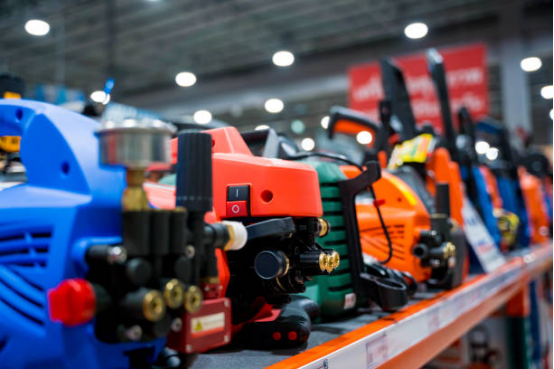
Application of Electric Pressure Washer
For electric high-pressure cleaning equipment, the injection leasing model implies the following changes:
- Project-based leasing: Cleaning companies, property management teams, or event organizers can rent electric pressure washers for specific periods without purchasing them, returning them after one or several uses. This further reduces equipment downtime costs.
- Subscription or long-term rental: For customers with fixed cleaning needs (such as property maintenance, fleet cleaning, or dock cleaning), the supplier can provide monthly or quarterly rental services, with equipment replacement, maintenance, and technical support as part of the service package.
- Flexible bundling options: Rental services can be bundled with training, insurance, and logistics support to enhance the overall service experience. For the electric pressure washer, its lightweight, electric-driven, and easily transportable features make it particularly suitable for a “rapid deployment-recycling-reuse” rental cycle.
The appeal of leasing services to customers lies largely in its transformation of equipment from an “asset burden” into a “service option.” For brand owners, this means that equipment lifespan, maintenance frequency, and reuse rate must all be reconsidered, thereby improving equipment design and service support levels.
Brand Opportunities and Differentiation Strategies
When brands enter the electric pressure washer rental market, they face competition from those offering more comprehensive, flexible, and reliable services. Here are some key opportunities:
- Service network development: Leasing brands should not only be equipment providers but also “cleaning solution providers.” This involves forming an end-to-end service chain, from logistics and distribution, on-site training, and usage guidance to equipment recycling.
- Data-driven operations: By remotely monitoring equipment (power consumption, operating time, nozzle wear rate, etc.), leasing companies can optimize equipment replacement cycles and pricing models and provide feedback on user behavior to customers. The leasing economy itself is being driven by intelligent technologies.
- Green and sustainable positioning: Electric cleaning equipment has environmental advantages compared to fuel- or air-driven models. Rental brands that emphasize “low noise, zero emissions, and high efficiency” can gain an advantage in a market where environmental awareness is increasingly growing.
- Flexible rental pricing: Brands can offer different rental plans based on customer usage frequency and project scale, such as “weekend special rentals,” “monthly package rentals,” and “pay-per-job” services. This attracts a diverse user base—from DIY enthusiasts to professional cleaning companies.
These opportunities mean that brands can build new business models through electric pressure washer rental services—shifting from selling equipment to “selling mobile cleaning capabilities” and establishing a sustainable, circular, and high-value-added service system.
Operational Challenges and Strategies
Despite the enormous opportunities, entering the rental market also presents some challenges that brands and operators need to acknowledge and strategize for:
- High equipment wear and maintenance frequency: The usage intensity of leased equipment is much higher than that of self-owned equipment, and brands need to develop strict maintenance procedures and cost structures.
- Logistics and return costs: Once the equipment is rented out, it needs to be transported, cleaned, and repaired before it can be rented again. Although the electric pressure washer is highly portable, the costs of delivery and recycling still need to be considered.
- Insufficient customer training: While the equipment is easy to use, incorrect operation can lead to nozzle damage, water stains, or customer complaints. Providing training or on-site guidance can reduce these risks.
- The pricing system is complex: leasing prices must take into account equipment depreciation, maintenance costs, idle rates, and market competition prices. Pricing errors may reduce the leasing company’s profits.
Recommendations include establishing clear equipment lifespan prediction models, setting up emergency service response mechanisms, and creating standard leasing agreements that are integrated with insurance or equipment damage protection schemes. Additionally, brands can employ “usage data feedback” programs to report leasing efficiency to customers, thereby enhancing trust and increasing contract renewal rates.
User perspective on renting an Electric Pressure Washer
Suppose a property maintenance service company operates in multiple cities and needs to perform high-pressure cleaning on dozens of building facades, parking lots, and public spaces every quarter. If all the equipment were purchased in-house, the initial investment could be tens of thousands of dollars, and the equipment might frequently be idle. Instead, consider leasing electric pressure washers:
- Customers lease several electric high-pressure cleaning machines on a quarterly basis, which includes logistics and distribution, operation training, and return services.
- After use, the equipment is quickly recovered and repaired by the lessee before being put into use by the next customer, thus improving the utilization rate of the equipment.
- With rental and operating costs spread out, customers can clearly see the cost of each cleaning session and are more willing to schedule cleaning sessions according to their needs.
- Rental companies can optimize equipment configuration and reduce failure rates by monitoring equipment usage data (such as hours, nozzle type, and maintenance frequency).
This model makes high-pressure cleaning services more like “on-demand services” rather than one-time capital expenditures, which aligns with the trend of a modern service economy.
Future Opportunities under the Leasing Model
From the perspectives of equipment utilization efficiency, cost optimization, and operational model innovation, electric pressure washers present a clear growth opportunity in the rental market. Brands that can establish a comprehensive service system, flexible rental solutions, and data-driven operations will be able to seize the initiative in an era where “equipment is no longer sold but provided as a service.”
For more practical knowledge about electric pressure washers, please follow us—we’re continuously sharing information.