A Complete Guide to Electric Pressure Washers for Cleaning the Exterior of RVs

electric pressure washer After your RV has endured long journeys, mud, insect damage, resin residue, and weathering, its exterior metal, glass, chassis, and rubber seals have quietly borne a heavy cleaning load. At this point, using an electric pressure washer can significantly improve cleaning efficiency while ensuring both detail and safety. This article will systematically introduce a zoned cleaning solution for three main areas: the body shell, chassis, and windows, combining low-pressure nozzles and a foam system to help you create a truly professional process for cleaning the exterior of your RV.
Why is RV cleaning different from cleaning regular vehicles?
The exterior structure of a motorhome (RV) is typically more complex than that of a regular car: large glass windows, aluminum or fiberglass shells, weatherstripping, exposed chassis components, slide-out structures, and various decorative accessories. According to industry guidelines, improper use of high-pressure cleaning tools, such as gasoline-powered jets, can damage weatherstripping, peel off film, and destroy the outer coating.
The advantages of using electric high-pressure cleaning equipment include:
- scheduling. Electric drives enable faster equipment startup and more flexible scheduling.
- surfaces. Foam systems or low-pressure prewashes reduce physical impact and make it safer to handle sensitive surfaces.
- A proper combination of nozzles and pressure can make cleaning both efficient and risk-controlled.
electric pressure washer Therefore, cleaning the exterior of a motorhome is not about “as fast as possible,” but rather “as precise as possible.” In this context, an electric pressure washer is a key tool, but it must be used correctly.
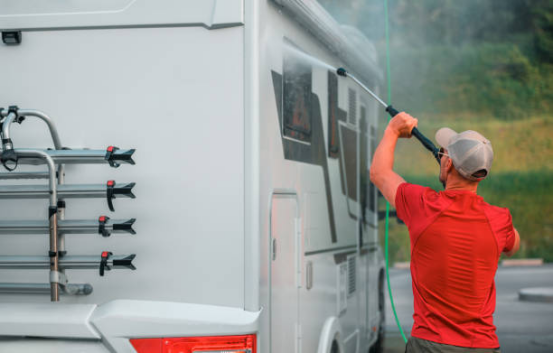
Partition cleaning solution 1: Body and side walls
The exterior of a motorhome is a large area made of various materials, making it the most important part to clean. The correct procedure is as follows:
Low-pressure foam pretreatment
First, spray the cleaning agent onto the car body using a foam system, wait 2-3 minutes to soak, and then begin rinsing with water. According to external cleaning recommendations, using snow foam in conjunction with a pressure washer can improve cleaning effectiveness and reduce damage.
Main body flushing: Electric high-pressure water jet
electric pressure washer Set the device to medium pressure (e.g., 1200-1800 PSI, depending on the material) + a 40° nozzle, and proceed regularly from top to bottom. This process, using an electric pressure washer with a low-angle nozzle, can cover a large area without damaging the casing.
Detailed inspection and protection
- Edges, door seams, sliding mechanisms, and trim strips: Use a wider-angle nozzle or a low-pressure mode to avoid damaging the seals.
- After spraying, quickly rinse off any remaining foam with clean water to prevent chemicals from remaining and causing discoloration of the film or coating.
- If there are minor scratches, they can be repaired with a special care product during the drying stage.
After performing this process, the sidewall cleaning time may be reduced by more than 30% compared to traditional scrubbing, while the surface effect is clearly visible.
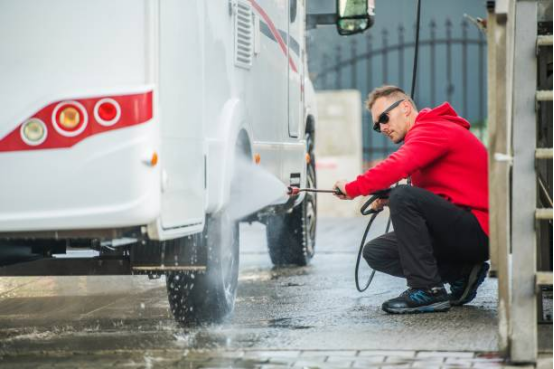
Partial Cleaning Solution Two: Chassis and Wheel Arches
The undercarriage area accumulates mud, salt, grass clippings, and insect residue, making it a high-risk area for corrosion and potential hazards. It is also more difficult to clean.
Preparation stage
First, park the RV on a level surface and open the bottom to observe the space. Close the sliding parts and cover the electrical interfaces and ventilation openings.
High-efficiency flushing process
- ‘using the Electric Pressure Washer‘s metal wheel arch nozzle (25° or narrower).
- 30°–40° When cleaning under the chassis, it is recommended to use a 30°–40° nozzle and move it from the rear of the vehicle forward to avoid splashing mud and water back.
- If there is any salt or ice residue, first use low-pressure water to dissolve it, then switch to high-pressure mode to rinse it clean.
Based on experience, a full chassis wash saves about 40-50 minutes compared to traditional manual scrubbing and reduces human contact with hazardous areas.
Standby protection and observation
- After rinsing, it is recommended to apply a chassis rust inhibitor or corrosion inhibitor.
- Inspect and dry the connectors and bottom seams to prevent water accumulation and corrosion.
- Record the cleaning time and equipment usage status for future reference.
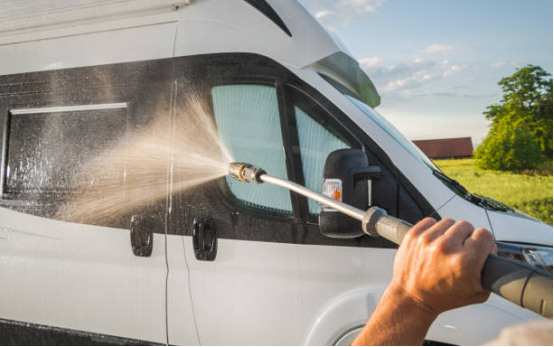
Zoned Cleaning Solution 3: Windows, Weatherstripping, and Decorative Details
This is the part that is most easily overlooked but has the greatest impact on the overall appearance and lifespan.
Foam + Low Pressure Mode
PSI) with a 40° window glass, aluminum frames, sliding rails, and weatherstripping are highly sensitive to pressure. It is recommended to pre-spray with the foam system of an electric pressure washer, then switch to low pressure (1000-1200 PSI) + a 40° nozzle, maintaining a distance of at least 3-4 feet.
Correct spraying techniques
- Rinse the windows and frames from the roof down to prevent water from seeping back into the sealant.
- Avoid spraying high pressure directly onto sealing strips, slide rails, and vents; it is recommended to use a soft brush and low-pressure water in these areas.
- For decorative film or car logo areas, use the lowest possible pressure and keep the spray gun moving to avoid water lingering and damaging the film adhesion.
Completion and drying stages
After rinsing, use a squeegee or microfiber cloth to dry the glass to prevent water stains from affecting its appearance. Check the weatherstripping for bulging, cracking, or detachment, and address any issues promptly.
Equipment Recommendations and Operation/Maintenance
electric pressure washers: To ensure effective cleaning and extend the lifespan of your equipment, the following are recommended practices for the use and maintenance of electric pressure washers:
- :Regularly inspect nozzles and piping: worn nozzles can reduce cleaning efficiency and may lead to pressure runaway.
- :Waterproof and moisture-proof treatment for motors: Since the cleaning environment is humid and dusty, ensure that the electric components are dry.
- : Pressure monitoring and recording: Establish a cleaning log to record the time, pressure, nozzle type, and cleaning area for each use, which helps to optimize the process.
- :Foam system cleaning: If a foam gun is used on the exterior of the vehicle, rinse off any residue promptly after cleaning to prevent chemical residue from damaging the exterior.
- :Resource conservation awareness: Although it is high-pressure cleaning, water should still be used in a reasonable manner. It is recommended to rinse from top to bottom and to control the spray distance and angle appropriately.
Summarize
electric pressure washer Efficient cleaning of a motorhome exterior requires more than just powerful spraying; it demands a meticulous, zone-specific, and standardized operational system. By using an electric pressure washer in conjunction with a foam system and low-pressure techniques, you can achieve “scratch-free cleaning and efficient coverage” in three main areas: the body shell, chassis, and windows.
I want to gain a deeper understanding of electric pressure washers. For more cleaning tips, guidelines, and case studies, please visit our website. Ready to start your next cleaning project? Keep your home looking brand new with just a systematic, professional cleaning solution.