Why do electric pressure washers need to run idle periodically?
“sheathed.” In the world of cleaning tools, the electric pressure washer is like a silent warrior. Most users only care about its power when spraying high-pressure water jets, but very few people notice the sense of ritual when it is “sheathed.”
Do you ever unplug your car, turn off the tap, and toss it into a corner of the garage after cleaning? If you do, you’re actually shortening the lifespan of this delicate machine. Today, we won’t talk about how to wash your car more thoroughly but rather delve into a core maintenance aspect that’s often overlooked: why your electric pressure washer needs to be periodically “idled,” depressurized, and drained.
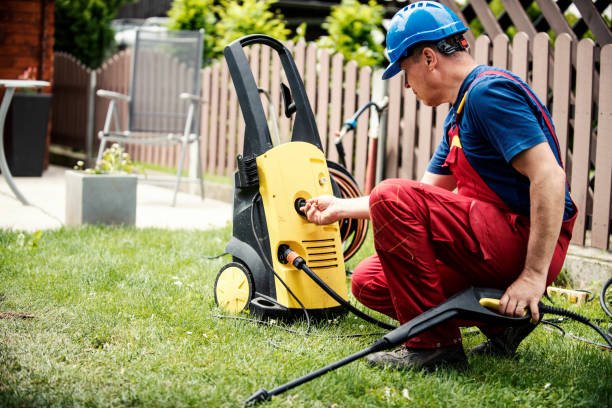
The “invisible killer” inside the pump body: residual water and air
—To understand why idling is necessary, we must first look into the heart of the electric pressure washer—the high-pressure pump.
Water is not a permanent solvent.
washers wereAlthough electric pressure washer was originally designed for water treatment, “static water” is the pump’s biggest enemy. When the machine stops running, the water remaining in the pump chamber begins to react chemically with the metal parts. This reaction is particularly severe in hard water regions, where mineral deposits form scale that adheres to delicate pistons and valves.
The latent phenomenon of cavitation
During startup or shutdown, if air gets into the pump, there is a risk of “cavitation.” When air bubbles burst suddenly under high pressure, the resulting localized shock wave is enough to leave tiny pits on the metal surface. This microscopic damage can be effectively avoided by following proper pump protection tips (such as venting the pump with water before connecting the high-pressure line).
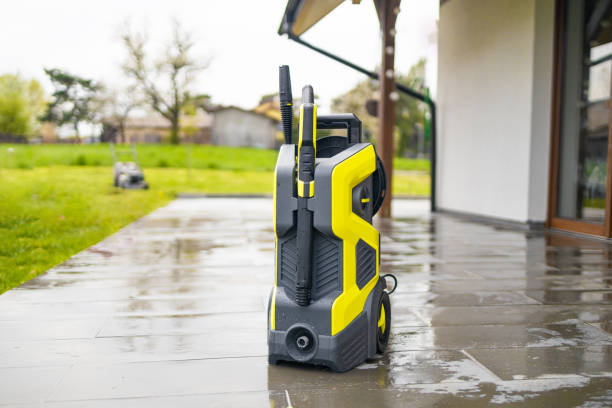
In-depth analysis: Why depressurizing is key to safety and longevity
Many users have reported that after using the electric pressure washer, the high-pressure pipe connectors become unusually difficult to disassemble. This is not because the connectors are rusted, but because there is still trapped pressure inside the system.
The continuous destruction of the seal by pressure
And after you turn off the power, the piping between the pump and the spray gun maintains extremely high pressure. This continuous tension can overload the rubber O-rings. If you don’t perform pressure washer depressurization, these seals will prematurely age, deform, or even crack, leading to leaks the next time you use the product.
“Unload” action in maintenance logic
The correct maintenance logic should be:
- Turn off the water and power.
- Pull the spray gun trigger until no more water is sprayed.
machine, but this simple action is depressurizing. It not only protects the machine but also you, preventing injury from accidental high-pressure water jets during disassembly.
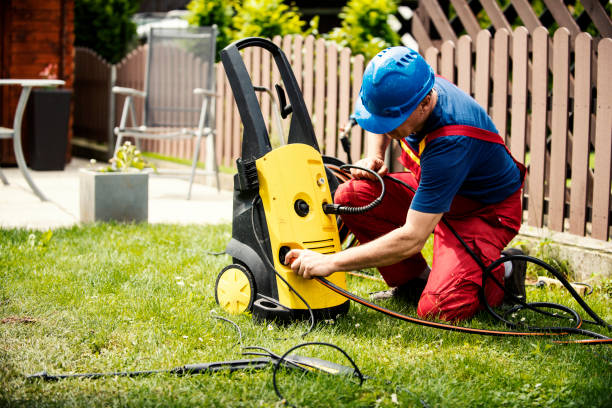
The Art of Idling: Eliminating the Last Threat
The term “idling” here refers to starting the motor for a short period of time (usually no more than 10-20 seconds) after the water supply is cut off. This action plays a crucial role in washer maintenance logic.
Centrifugal drainage and antifreeze protection
In cold climates, even a small cup of water remaining inside the pump can be broken by the force of its expansion upon freezing. Idling serves to use the piston movement driven by the motor to “swing out” any remaining water trapped in the pump’s dead corners.
Leave room for antifreeze.
If you plan to store the machine for an extended period, injecting Pump Guard after idling will result in smoother operation. Without the dilution of residual water, the guard can more evenly coat the surfaces of internal components, forming a lubricating and corrosion-resistant film.
Experts advise: Never run dry for extended periods. Since the electric pressure washer relies on flowing water to cool the pump body, the dry running time must be strictly controlled within 30 seconds; otherwise, the heat generated by friction will instantly burn out the water seal.
Build your Washer Maintenance Logic system.
Having understood the principles, we need to transform these actions into intuitive habits. A scientific checklist for electric pressure washer cleanup should include the following:
- Flush: If you have used a cleaning agent, please flush the system with clean water for 2 minutes to prevent chemical residue from corroding the interior.
- Power Off: Turn off the power switch and unplug the power cord.
- Depressurizing: Turn off the tap and pull the trigger to release the pressure in the pipes.
- Drain: Disconnect the high-pressure hose and briefly turn on the motor (about 10 seconds) to drain the remaining water from the pump.
- -angleStorage: Organize the hose to avoid sharp angle folds.
“breathing.” Respect the machine’s “breathing.”
An electric pressure washer depends not only on its rated pressure (PSI), but also on how it is treated. Regularly performing idling and depressurizing essentially gives the machine a chance to “take a deep breath,” allowing it to completely relax from the tension of extremely high pressure.
By understanding the logic behind these pump protection tips, you’re no longer mechanically following the steps in the manual but extending the lifespan of a reliable partner.
FAQ: Frequently Asked Questions about Electric Pressure Washer Maintenance
1. Does it need to run idle after each use?
Yes, especially if you don’t plan to use it again within 24 hours. Even in summer, draining excess water prevents bacteria growth or the formation of a sticky biofilm, protecting the delicate valve plates inside the pump.
2. Why does my electric pressure washer make a loud noise when it stops and releases pressure?
This sound is usually caused by the expulsion of air mixed with water from the system. As long as it’s not a metallic clanging sound, it’s part of the normal pressure washer depressurizing process. If the sound is unusually harsh, it’s recommended to check if the inlet filter is clogged, causing poor air intake.
3. What will happen if I accidentally let it idle for more than a minute?
This is extremely dangerous. Electric pressure washer pumps typically cool themselves using flowing water. Running dry for more than a minute can cause the water seal to melt due to overheating and may even cause the piston rod to break. If this happens, immediately turn off the power and allow the machine to cool naturally. Never immediately turn on cold water, as the temperature difference could cause the pump casing to burst.
Related Posts
Repair or Throw Away? Electric Pressure Washer Repair Costs and Reset Decision Guide
-
Posted by
 Marcus Whitfield